


Article
Exosomes – New Delivery Tool for Bioactives
Food and Nutrition
Introduction
Why is there a need for developing a better bioactive delivery mechanism?
Providing nutrition/treatment for patients are complex in terms of three aspects:- Understanding the mechanism and identifying the target for bioactive action
- Identifying and developing the bioactive molecule
- Delivering the bioactive to the target
What are exosomes?
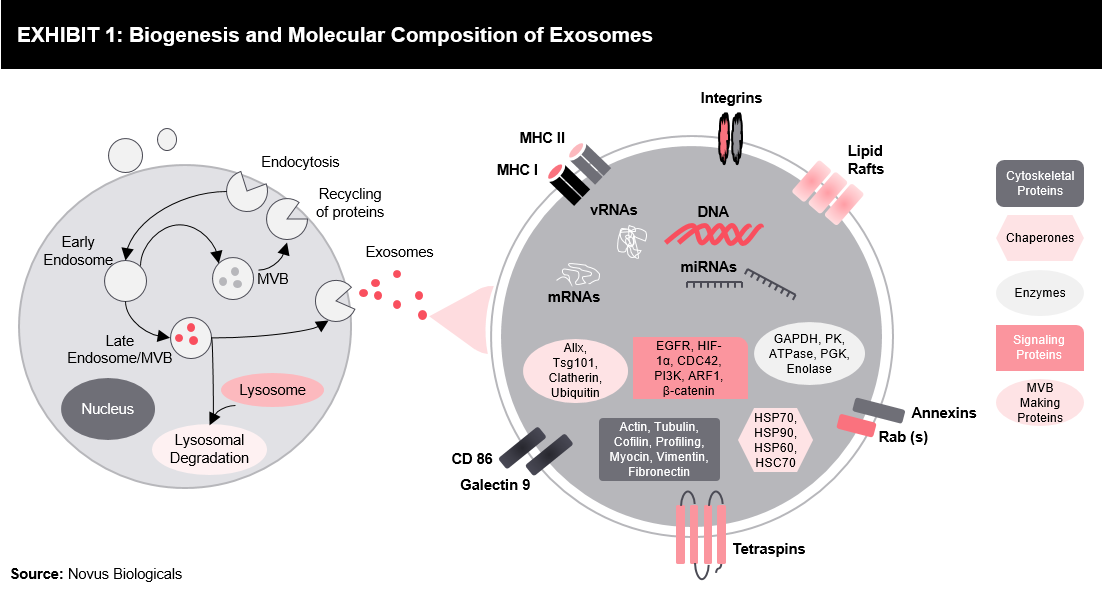
Exosomes are very small vesicles having an average size of 30-150nm. They are capable of carrying RNA and proteins in them. They are secreted by cells and perform various functions in the human body, such as intercellular communication and signaling. Exosomes are different from microvesicles in terms of formation, with microvesicles forming near the plasma membrane via membrane budding. Exosomes comprise of membrane-bound intracellular proteins. The contents include membrane transport and fusion proteins, MHCs, heat shock proteins, tetraspanins, and others. Further, they comprise of proteins specific to the cell from which they are secreted. How are exosomes formed? Exosomes are formed from cells via a complex process and are then secreted by the cells. The elaborate production process is divided into three stages:- Cell membrane invagination forms intracellular bodies
- Intracellular body polyvesicularization
- Multivesicular body and plasma membrane fusion to release exosomes
What are the functions of exosomes? What are the advantages?
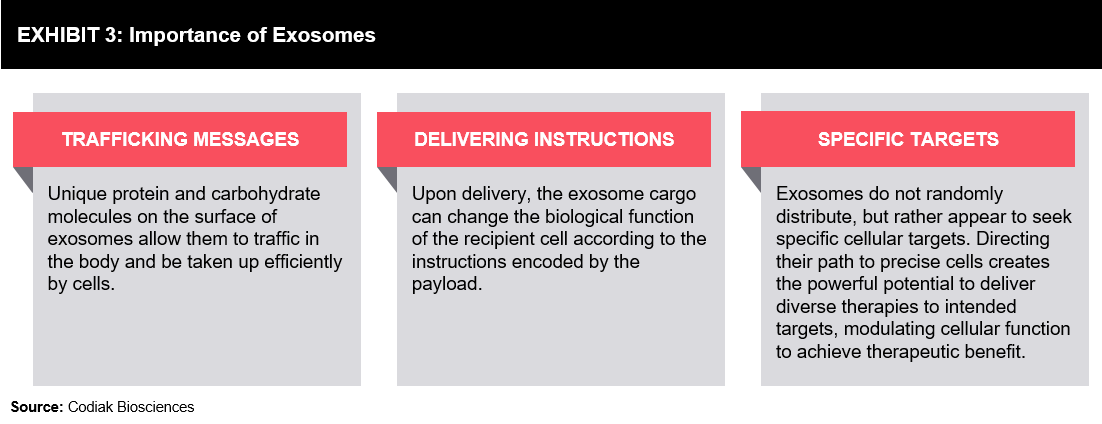
Exosomes are biologically active vesicular structures containing liposomes, proteins, RNA, and miRNAs. They can be absorbed by surrounding cells and different tissue cells in the body fluid circulation. They help in the transfer of substances and information between cells while participating in the regulation of gene expression levels of recipient cells and the physiological functions of recipient cells. Exosomes are also involved in other biological functions, including immune regulation. The immune activity of exosomes can be observed as:- Inducing T lymphocyte immune responses caused by exosome carrying antigen secreted by B lymphocytes
What makes exosomes efficient bioactive delivery tools?
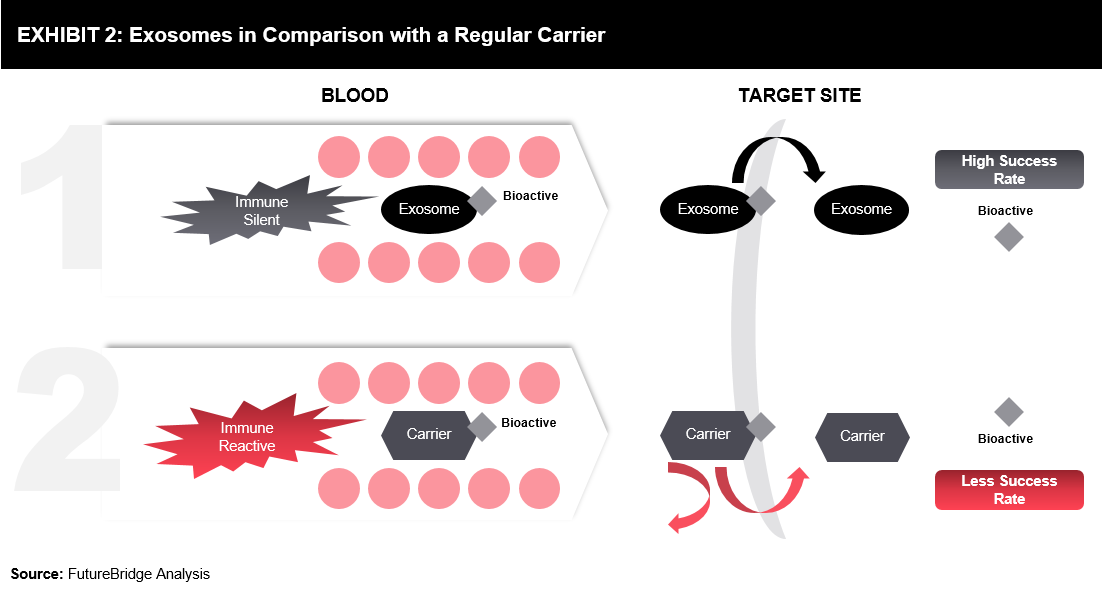
The inherent properties of exosomes make them a suitable candidate for drug delivery. Exosomes avoid renal clearance due to their large size while being small enough to escape uptake by the reticuloendothelial system. Exosomes accumulate at tumor sites due to the structure of the vasculature and abnormal lymphatic drainage. This specific characteristic is what makes them a suitable carrier for drug delivery in patients with cancer. Two inherent characteristics of exosomes offer important opportunities for drug delivery (refer Exhibit 2)- Immune Silent: Evades the immune system that allows exosomes to move through various sensors in the body, which is used to detect and halt the spread of foreign substances.
- Membrane composition: Complex membrane composition of exosomes allows them to deliver biological messages.
- Forming an aqueous inner compartment, and
- Lipophilic outer layer
Active Entities
The exosome landscape has a mixed set of entities ranging from established players to start-ups. Some examples of established players in the landscape include Thermo Fisher Scientific (US), QIAGEN N.V. (Netherlands), Lonza (Switzerland), and Bio-Techne Corporation, along with other SMEs such as System Biosciences, LLC, and Diagenode.Production of Exosomes
The start-up activity in the landscape is prominent. Examples of two UK-based startups who have developed the process for manufacturing exosomes are considered for explaining the production of exosomes. The first example (refer Exhibit 4) looked at is of Codiak Biosciences. The start-up is based out of the UK and has developed the engEx Platform, which has been patented.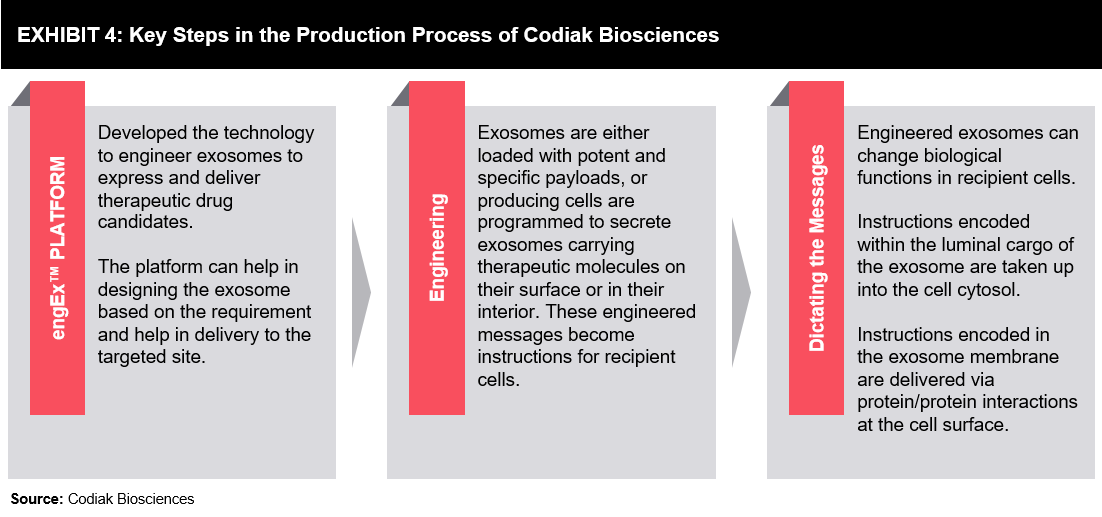 The process comprises of:
- Culturing a population of producer cells in a single-cell suspension
- Culturing in an animal-free serum
- Using tangential flow filtration perfusion or alternating tangential flow filtration perfusion to increase cell viability compared to cells cultured using a fed-batch culturing method cultured for the same number of days.
- Considering extracellular vesicle preparation comprises reduced proteinaceous contaminants, nucleic acid contaminants, small molecules, metabolites, and membranous contaminants.
Applications of Exosomes
Current applications being researched
Exosomes are being majorly considered for their use in therapeutic applications. They are capable of stimulating immune responses and aiding in the development of vaccines to treat cancers. Further, exosomes are potential biomarkers that can help in the detection of diseases and can be used for diagnostic purposes as they are found in body fluids. One such application that is mainly being focused on is diagnostics. Exosomes provide a non-invasive mode of biopsy for professionals and reduce the risks and complications associated with biopsy. Exosomes Diagnostics launched a disruptive technology in 2016 for detecting and gaining a real-time understanding of a cancerous tumor. The technology helps in understanding the tumor activity and enabling the detection of important changes. The technology was a major hit in the market, leading to its acquisition by Bio-Techne.Possible avenues/applications
Exosomes are used for therapeutic and diagnostic purposes; however, the application of exosomes can be expanded to other areas due to their inherent properties and their ease of adaptation with human systems. Research is being conducted on using exosomes via oral delivery to consumers. PureTech Health, a US-based company, is focusing on providing a delivery alternative using milk exosomes. The company specializes in the brain-immune-gut axis and is working on the oral administration of biologics, nucleic acids, and complex small molecules via exosomes. The advantage of milk-derived exosomes is that they can improve the oral bioavailability of macromolecules and complex small molecules. Milk exosomes are evolutionarily-conserved microvesicles that are capable of passing through the stomach and into the GI tract due to their high integrity during transit. Milk exosomes have a further advantage of being more durable in comparison to other exosomes. They have proved to be durable under acidic conditions. In line with the development of milk exosomes, it can be predicted that milk exosomes can be possibly used in the nutrition segment. They can be availed for providing specialized nutrition, but the challenge lies in passing the approval process.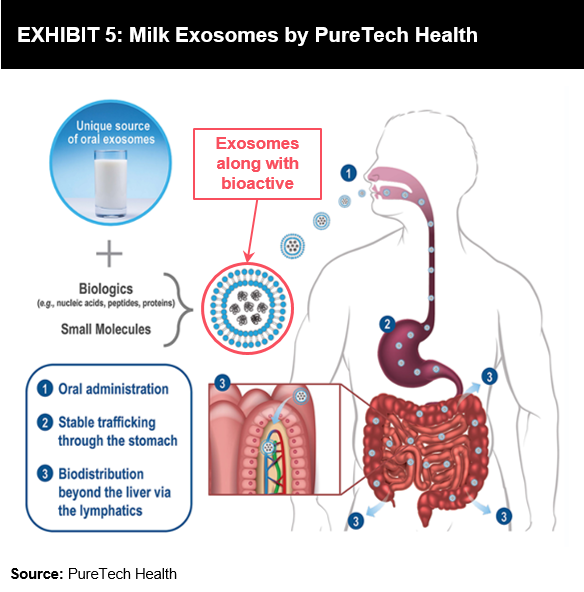
References
- https://www.novusbio.com/research-areas/cell-biology/Exosome-research-tools
- https://www.thermofisher.com/in/en/home/life-science/cell-analysis/exosomes.html
- https://www.creativebiomart.net/blog/overview-of-formation-and-function-of-exosomes-as-well-as-the-important-role-in-the-occurrence-and-deterioration-of-cancer/
- https://www.frontiersin.org/research-topics/4844/exosomes-role-in-cell-function-neurodegeneration-and-therapy
- https://www.evoxtherapeutics.com/Exosome-Technology
- http://www.codiakbio.com/science/
- https://www.mybeckman.in/resources/research-areas/exosomes/drug-delivery-with-exosome-nanoparticles
- https://www.britannica.com/science/exosome
- US20190085284A1
- US20160137716A1