

Next-Gen Sunscreen Promises Smarter Protection in the Age of Skin Longevity
The Evolution from Sunburn Prevention to Skin Longevity!
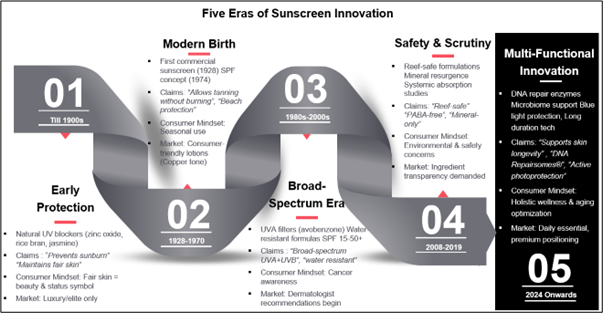
The sunscreen journey spans nearly a century, evolving from primitive UV blockers to sophisticated longevity technologies. This progression reflects not merely formulation improvements, but a fundamental reconceptualization of what sun protection means for human health.
Product positioning has transformed dramatically. Early sunscreens simply “prevents sunburn” or “allows tanning without burning.” By the 2000s, marketing emphasized “broad-spectrum protection” and “water-resistance.” Today’s formulations promise “DNA repair,” “blue light defense,” “microbiome support,” and “skin longevity” reflecting the shift from reactive protection to proactive health optimization.
The Consumer Disconnect, Where Sunscreens Fall Short
Despite market growth, significant gaps persist between consumer needs and product performance. Six consumer personas revealing opportunities for targeted innovation.
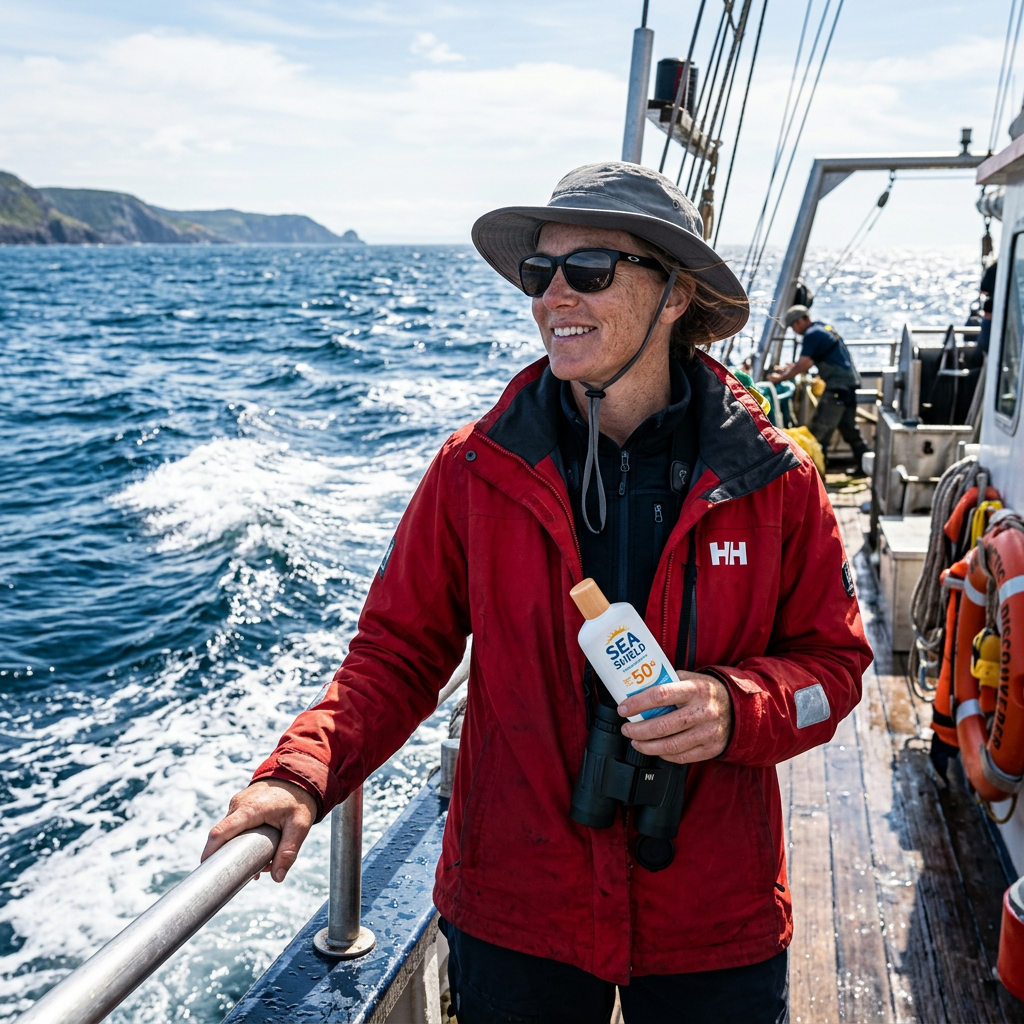
Elena - Ocean Explorer (27): Diving enthusiast, reef-conscious
• Issue: Heavy mineral residue, white cast, dehydration after ocean exposure
• Scientific Insight: Saltwater increases TEWL, UV-induced collagen breakdown accelerates photoaging. Mineral filters require high particle loading, cosmetic barriers, toxicity to marine organisms.
• Current solution: Mineral sunscreens (ZnO, TiO₂) | Reef-safe labeled Water-resistant | Lightweight non-nano mineral dispersions | Second-skin film-forming | Verified eco-toxicology reef-safe
Olivia- Remote Professional (31): Works from home, disciplined routine
• Issue: Vitamin D deficiency concern, confusion about indoor protection needs
• Scientific Insight: HEV from screens + UVA through glass cause oxidative stress. Excessive UVB blocking may influence vitamin D synthesis.
• Current solution: Broad-spectrum sunscreen | Blue-light protection skincare | Vitamin D supplements | Selective UV filtering tech | Smart UV exposure guidance | HEV protection integration


Ernesto- Engineer (29): 8-10 hrs. outdoors, polluted environment
• Issue: Sunscreen fades with sweat/dust, hyperpigmentation despite use, reapplication impractical
• Scientific Insight: Sunscreens lose efficacy after 2-3hrs (photodegradation, sweat). PM2.5 pollution + UV produces ROS accelerating oxidative aging
• Current solution: High-SPF sport formulations Water-resistant Portable sticks/sprays | Long-duration photostable sunscreens Encapsulated UV filters multi-stressor protection (UV + pollution)
Mia-Travel Vlogger (21): Outdoor filming, HD cameras, Gen-Z prefer a minimalistic approach
• Issue: White cast visible on camera, greasy shine in sunlight, avoids heavy textures during shoots, Don’t like a multi-step skincare routine.
• Scientific Insight: Inconsistent use increases chronic UVA exposure results in fine lines, oxidative stress, pigmentation. Mineral particles scatter visible light causing camera flashback.
• Current solution: Tinted sunscreens Gel, serum, BB cream, or cosmetics with SPF | SPF Hybrid chemical filters | Invisible UV filters | strong UVA Primer-like cosmetic finish | Uniform body-coverage spray tech


Samira- Model (25): Frequent aesthetic procedures
• Issue: Post-procedure skin irritation, needs gentle yet protective formulation
• Scientific Insight: Compromised barrier post-procedure increases sensitivity. Requires non-irritating, barrier-supportive formulation with thermal cooling.
• Current solution: Gentle formulas Fragrance-free Post-procedure specific | Barrier-supportive SPF Thermal management tech Senescent cell
Charlotte-Premenopausal Mother (44): Noticing skin texture changes
• Issue: Pigmentation worsens despite SPF, increased sensitivity, fine lines deeper after sun
• Scientific Insight: Declining estrogen reduces collagen density increasing UV-induced melasma vulnerability. Infrared + heat contributes to inflammatory aging.
• Current solution: Broad-spectrum | Anti-aging skincare Moisturizing SPF | Infrared & heat-protective | Longevity actives (peptides, ceramides) | Hormone-supportive formulations

1. UV Filter Innovations
• Regulatory Breakthrough, the Bemotrizinol Watershed Moment
The December 2025 FDA proposed administrative order for bemotrizinol (Tinosorb S) represents the most significant regulatory development in three decades. This broad-spectrum organic filter approved in the EU since 2000, Australia, Asia, and Canada since 2023 offers photostability superior to avobenzone, the current US broad-spectrum standard, while maintaining low systemic absorption (<0.5 ng/mL). Its approval would close the innovation gap that has limited US formulators to 17 filters while European counterparts access 30+.acids (MAAs) from ocean organisms demonstrate UV stability. These bio-derivation approaches solve dual challenges: regulatory scrutiny of synthetic chemicals and environmental safety concerns.
Beyond bemotrizinol, bio-derived filter research is accelerating. Deinoxanthin- a carotenoid fermented from Deinococcus radiodurans, the world’s most radiation-resistant organism- offers reef-safe UV absorption. Marine-inspired Mycosporine-like amino
Rather than awaiting new filter approvals, formulators are engineering superior performance from existing ingredients. Hybrid optimization combines organic and inorganic filters through stabilization technologies that address historical limitations; particularly the particle aggregation that creates UV protection gaps and cosmetic defects.
Kolmar Korea’s UV-DUO PLUS technology exemplifies this approach. By encapsulating inorganic UV filters (zinc oxide, titanium dioxide) with organic components, the technology prevents particle coagulation while maintaining mineral photoprotection benefits. Clinical testing demonstrates 24.8% improvement in long-wavelength UVA protection at 400nm compared to conventional formulations; addressing the critical UVA-II range (370-400nm) associated with photoaging and pigmentation >>
MBlue Labs leverages methylene blue, a century-old pharmaceutical compound, as a core sunscreen active demonstrating superior UVB absorption and DNA damage prevention compared to oxybenzone while posing no harm to coral reefs. The ingredient exhibits dual functionality; absorbing UV radiation while simultaneously repairing UV-induced DNA damage through enhanced cyclobutane pyrimidine dimer clearance and reactive oxygen species neutralization (Zheng Xiong, 2021). Coral safety testing shows no bleaching or growth inhibition at effective concentrations, in contrast to oxybenzone’s documented reef toxicity at concentrations as low as 62 parts per trillion. MBlue Labs has translated this into commercialization with the launch of Bluevado SunFix in 2022 and have granted US patent US12403079 B2 approval in July 2025, demonstrating regulatory feasibility.
Clinical Evidence Spotlight: ISDIN Eryfotona Actinica SPF 50 + DNA Repairsomes® technology demonstrates:
• 61% reduction in CPD formation (vs 35% with sunscreen alone)
• Prevents new actinic keratoses formation in high-risk patients
• Continues repair activity after sun exposure ends >>
Thanara Anti-Aging & All Repair Skincare SPF50/PA+++ (May 2025): Developed by AL-DNA (Chulalongkorn University), this product uses 4P-Biotics technology (Probiotics, Parabiotics, Prebiotics, and Postbiotics) to balance the skin’s microbiome while providing high-level SPF protection.>>
OneSkin’s OS-01 peptide is the first commercially available senotherapeutic in suncare, used in OS-01 FACE SPF 30+ and BODY SPF 30+. It targets UV-induced senescent (“zombie”) cells, reducing P16 and IL-8, thereby limiting inflammatory aging. Notably, it showed a 2.6-year reduction in skin biological age within 5 days (MolClock), marking a shift from passive protection to active cellular rejuvenation. >> l >>
Complementing this, oral photoprotection using Polypodium leucotomos extract (PLE) shows a 6× reduction in sunburn and 15× increase in minimal erythema dose (240 mg twice daily), driven by antioxidant, DNA-protective, immune-supporting, and matrix-preserving effects. It is increasingly used as an adjunct for high-risk and photosensitive individuals. >>
Gadusol, a naturally occurring UV-absorbing compound found in marine organisms, is now produced via fermentation by Gadusol Labs (acquired by Arcaea, 2022). It provides dual functionality; UV absorption and DNA damage repair, mimicking biological photoprotection while remaining reef safe. >>
*
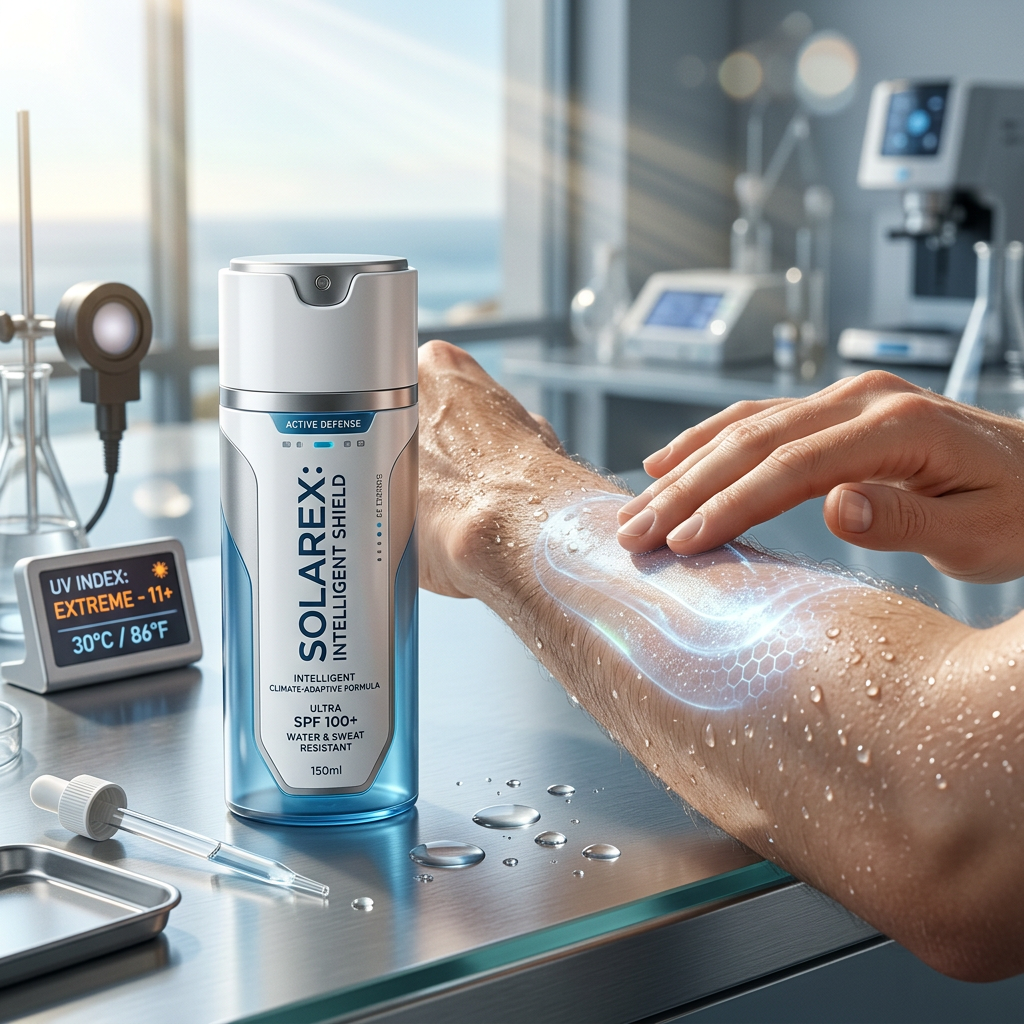
Humidity-Adaptive Technologies: Two major manufacturers have developed moisture-responsive sunscreen systems. Kao Corporation’s Bioré UV Aqua Rich Airy Hold Cream (March 2025) uses agar hydrogel capsules with UV absorbers and high water-retaining polymers, absorbing >2× moisture at 88% humidity. Film thickness increases to 175% with water exposure and returns to baseline after drying, with clinical trials (n=60) showing 70%+ users reporting all-day comfort in humid conditions.
Shiseido employs a complementary approach, forming water-repellent films only upon contact with sweat or seawater. The formulation self-regulates moisture; hydrating in dry conditions and releasing excess in humidity; while reducing IL-1α activation and age-spot formation.
*
Bio-Adhesive Filters : Skinosive’s modified UV filters with adhesive molecular “hooks” bind to stratum corneum proteins, clinically validated for 8-hour protection without reapplication; double the standard duration.
*
Stimuli-Responsive Systems: ROKA’s Smart UV PvB 360 employs sunlight-responsive UVA photoadapters that increase protection as UV intensity rises, transforming from UVB absorber to UVA protector through photochemical structural change.
*
Self-Healing Film Technologies: Three approaches enable autonomous repair. Lancôme’s UV Expert Xtreem Shield (L’Oréal R&I Japan, April 2025) uses Polyionic Complex Gel Particles (PGP) to form self-repairing networks with 6× friction resistance. Anessa features AutoRepair Technology™, maintaining a slightly fluid UV layer that fills micro-cracks from movement, sweat, or friction, restoring uniform coverage without reapplication. Emerging third-generation systems use shape-memory polymers inspired by automotive coatings.
*
Ultra-Durable Waterproofing: SolRX SPORT’s WATERBLOCK® system maintains ≥97% SPF after 8 hours of water immersion (AMA Laboratories verified), delivering ~6× improvement over the FDA’s 80-minute water-resistance standard and targeting high-endurance users such as marathon swimmers, triathletes, and water sports professionals.
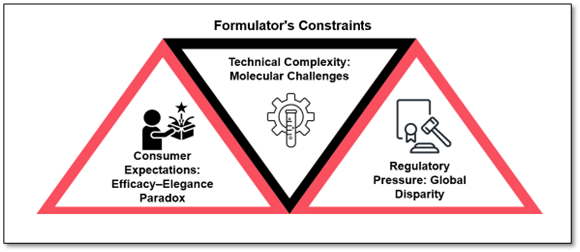
• Consumer Expectations: Efficacy–Elegance Paradox
Consumers demand high SPF + broad-spectrum efficacy with invisible, lightweight feel, creating trade-offs. Minerals worsen white cast, water resistance adds heaviness, and stable filters may lack elegance. This is further complicated by ingredient skepticism, making optimization across performance and aesthetics challenging
• Regulatory Pressure: Global Disparity
A 30-year US approval gap has created market distortion. While Europe has access to 30+ UV filters, the US remains limited to 17, driving reliance on avobenzone despite photodegradation issues. Sunscreens are regulated as OTC drugs in the US (high cost, long timelines) vs cosmetics in Europe (faster entry), forcing region-specific formulations and enabling grey-market imports.
• Technical Complexity: Molecular Challenges
Formulation remains complex: avobenzone requires stabilizers (e.g., octocrylene), new filters face solubility/crystallization issues, and minerals cause white cast vs nanoparticle safety trade-offs. Water resistance conflicts with lightweight textures, and filter incompatibility can reduce efficacy. Evolving testing methods (in vivo to in vitro, HDRS) and global misalignment increase cost and delay launches.
6. Three Strategic Pathways Forward and the Innovation Trajectories
The sunscreen future unfolds along three distinct innovation trajectories: each representing different strategic bets on technology evolution, consumer adoption, and regulatory environments.
• Enhancement Path: Optimizing Current Technology
This near-term pathway focuses on maximizing performance within existing sunscreen paradigms. Smart film-forming polymers create breathable protective layers lasting 6-8 hours. Encapsulated UV filters release gradually for extended wear. Transparent skin patches with UV-responsive color change provide visual reapplication cues. Powder and stick formats solve reapplication convenience. This approach requires minimal consumer behavior change and leverages established manufacturing infrastructure.
Market readiness is high technologies exist and regulatory pathways are clear. Consumer adoption friction is low because products function similarly to current sunscreens with improved performance characteristics. This pathway dominates current R&D investment across major brands.
• Convergence Path: Multi-Modal Protection Systems
This mid-term trajectory; combines complementary protection modalities. Oral Polypodium leucotomos supplementation (240mg BID) plus advanced topical formulations with DNA repair enzymes create layered defense. AI-powered apps integrate genetic testing (MC1R variants, DNA repair capacity assessment), real-time UV monitoring, location-based recommendations, and personalized SPF guidance. Wearable UV sensors provide cumulative exposure tracking.
This pathway requires consumer education on multi-product protocols and investment in digital infrastructure. However, it addresses unmet needs (vitamin D concerns, indoor-outdoor transitions, variable UV intensity) that single-product approaches cannot solve. Dermatology practices are early adopters, prescribing oral photoprotectants alongside topical recommendations.
• Disruption Path: Bio-Engineered Replacement
This long-term possibility envisions sunscreen replacement through biological interventions. Synthetic melanin formulations provide natural pigment protection without UV exposure or skin color change. Epigenetic approaches enhance endogenous DNA repair mechanisms. Gene therapy augments natural UV defenses (though ethical, regulatory, and technical barriers remain substantial). Biomimetic melanin research by Gadusol Labs demonstrates proof-of-concept for reef-safe, bio-derived photoprotection that repairs DNA damage simultaneously.
Market adoption faces significant headwinds: consumer acceptance of genetic modification, regulatory approval complexity, unknown long-term effects, and fundamental questions about altering human biology for cosmetic convenience. This trajectory represents moonshot research rather than near-term commercial strategy, yet its transformative potential warrants monitoring.