


Article
Autonomy Delay: Current Challenges and Bottlenecks
Mobility
Prelude to Current Scenario
The year 2020 was supposed to be driverless cars’ introduction to the broader public. Not very long ago, we started hearing bold predictions of the robotaxi future, promised to arrive by 2020 or shortly after that. However, most autonomous technology developers aiming for Level 5 autonomy just a few years ago scaled down their full autonomy targets.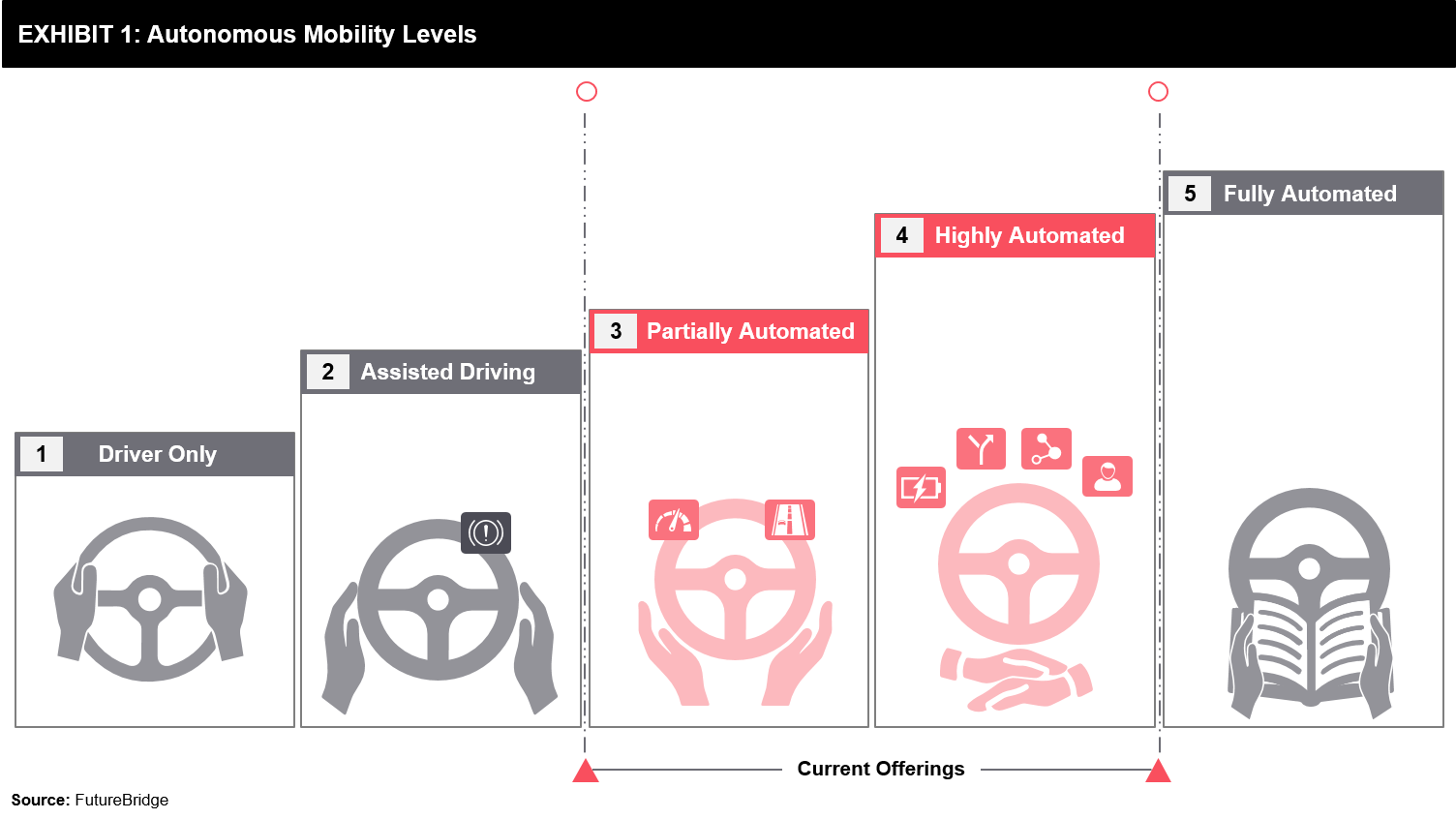 At the start of this decade, several developers revealed prototypes of Level 2 and Level 3 semi-autonomous vehicles and also provided their roadmap to level 5 vehicles. The initial era, stretching from 2010 to roughly 2015, was viewed as the early years of developing autonomous driving technologies. It was then followed by an exceedingly exciting but the shorter period from 2015 till 2018 when Level 5 autonomy seemed closer to reality. This optimism was because getting from Level 3 to Level 5 would take almost the same time as it took to get from Level 1 to Level 3.
Indeed, among several leading developers, Uber had stacked up many autonomous miles with its Volvo modified test vehicles in numerous cities, before the unfortunate incident in the spring of 2018. Even Tesla Autopilot accidents continued to increase, sending a signal to the industry that Level 4 and 5 may take a much longer time to achieve. These developments did not help in building a definite acceptance for level 5 vehicles among the consumers.
At the start of this decade, several developers revealed prototypes of Level 2 and Level 3 semi-autonomous vehicles and also provided their roadmap to level 5 vehicles. The initial era, stretching from 2010 to roughly 2015, was viewed as the early years of developing autonomous driving technologies. It was then followed by an exceedingly exciting but the shorter period from 2015 till 2018 when Level 5 autonomy seemed closer to reality. This optimism was because getting from Level 3 to Level 5 would take almost the same time as it took to get from Level 1 to Level 3.
Indeed, among several leading developers, Uber had stacked up many autonomous miles with its Volvo modified test vehicles in numerous cities, before the unfortunate incident in the spring of 2018. Even Tesla Autopilot accidents continued to increase, sending a signal to the industry that Level 4 and 5 may take a much longer time to achieve. These developments did not help in building a definite acceptance for level 5 vehicles among the consumers.
Industry Pulling Back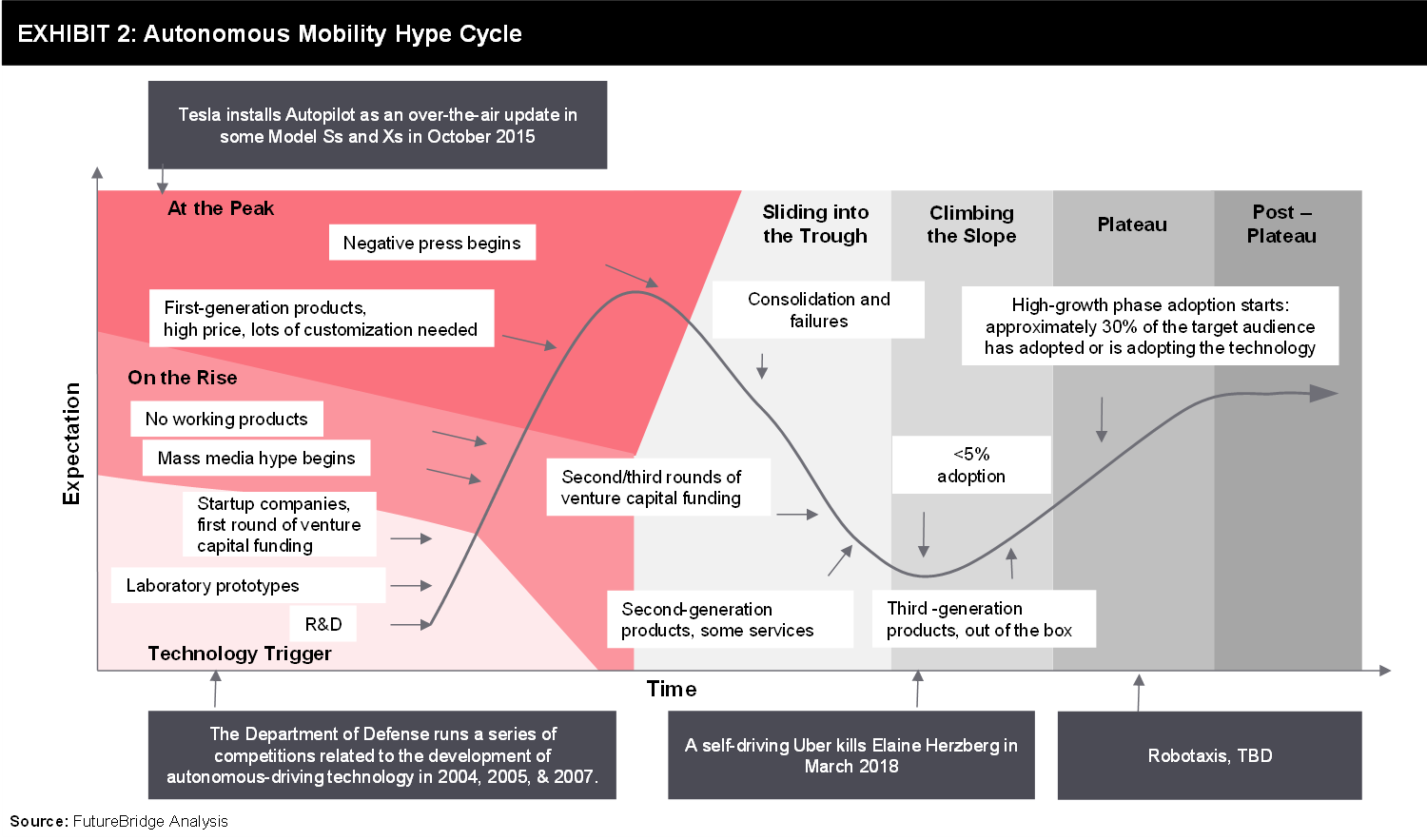
Not just level 5, few industry players also scaled down their efforts in mid-level autonomous vehicles, indicating pullback or general delay for higher-level autonomy (Level 3 to Level 5).
- Magna and Lyftdissociated with each other on autonomous development
- Audichanged its plans to offer even Level 3 autonomy in the current A8 sedan
- PSAhas moved away from L4 automation, instead of focusing on L1 to L3 and ADAS, stating that the cost to achieve L4 would be very high and reduce its profit margin
- Waymo’s valuation slashed
Perpetual Challenges Limiting the Growth
Autonomous developers have recognized that standalone innovations in cameras, radar, and Lidar sensors will not lead to genuine autonomy if they don’t focus enough on the software stack and computing hardware. Besides, the holistic development with “Enabling Regulations” is not seen frequently in the industry, giving rise to a multitude of challenges. Some of these include: Defining Suitability of Sensor Packages A significant challenge in automotive software model development is understanding the full range of edge-cases with respect to sensor packages. The human eye has higher resolution, but even better, it can adapt to a wide variety of lighting, contrast, and calibration scenarios. On the other hand, the sensors are very brittle and work in limited operational ranges of these parameters. Some of the most common challenges on sight have been –- Dealing with light coming into the camera
- Higher resolution for a detailed view of a small object (human fovea can focus on a specific part of the image and assess that in detail)
- Managing sensor redundancy
Ongoing Activities and Drivers for Autonomous Driving
ADAS technology (< L3) adoption could pick up pace in the next five years, mainly pushed by regulatory mandates from the UN, EU, US, etc.- ADAS adoption will increase rapidly in the coming five years, led by countries like the US, Europe, Japan, etc.
- Regulatory mandates will enhance the adoption like the US and EU is making AEB and FCW mandatory by 2020-23
- The changing automotive market with increasing ADAS systems offers new opportunities for players to generate premiums
- General improvement in autonomous software (machine vision, sensor fusion) and ML algorithms across industries and applications
Level 5 skepticism and a reconsideration
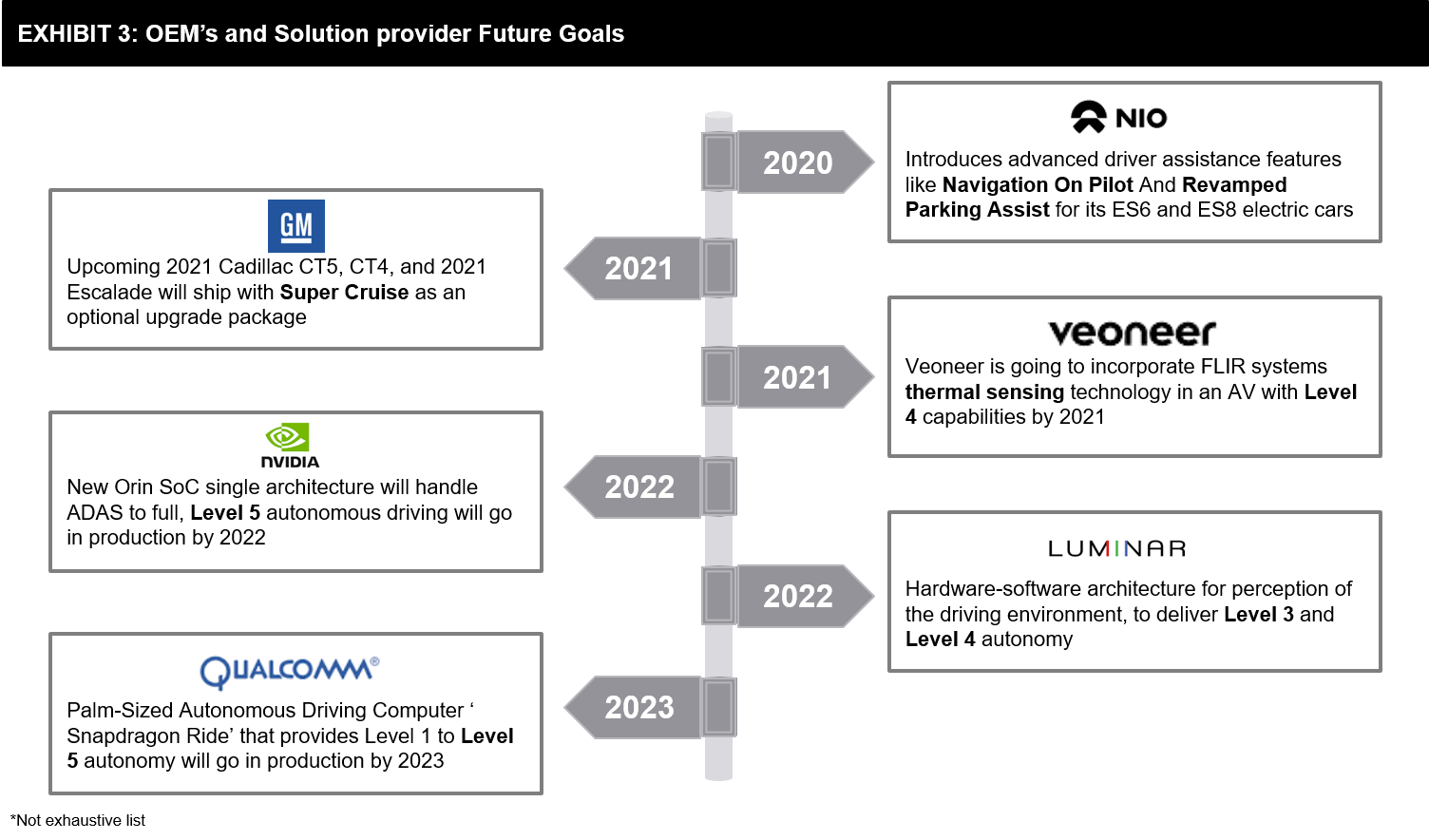
Launching an autonomous vehicle will require relentless effort on all technology fronts. As funding for autonomy projects dries up at legacy automakers, the new players & outsiders may pick up the baton and lead the technology front. With enough money already in, and with hundreds of start-ups and researchers working on developing the solutions, the progress might be few software upgrades away and might surprise the skeptics. Considering the current turmoil, we still believe that autonomous technology will mature for deployment by 2025-2030, and countries like China would start deployment for mass use. For the rest, deployment in the latter half of the coming decade will be an optimistic scenario. In the next decade, most likely, we will have to be content with the V2X and smart infrastructure technologies that are now reprioritized by OEMs and regulators alike before we get to ride a self-driving car.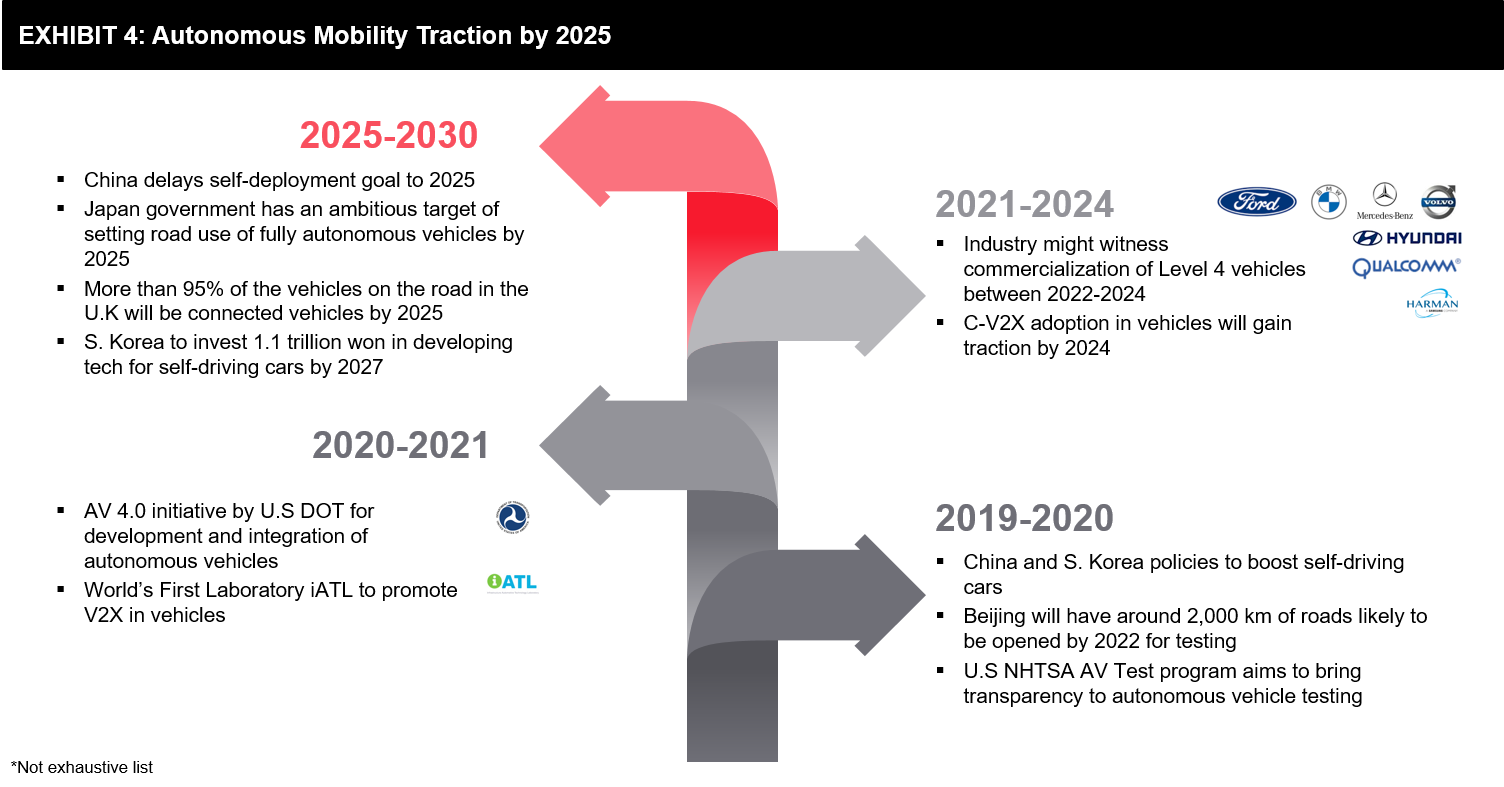 Launching an autonomous vehicle will require relentless effort on all technology fronts. As funding for autonomy projects dries up at legacy automakers, the new players & outsiders may pick up the baton and lead the technology front. With enough money already in, and with hundreds of start-ups and researchers working on developing the solutions, the progress might be few software upgrades away and might surprise the skeptics.
Considering the current turmoil, we still believe that autonomous technology will mature for deployment by 2025-2030, and countries like China would start deployment for mass use. For the rest, deployment in the latter half of the coming decade will be an optimistic scenario. In the next decade, most likely, we will have to be content with the V2X and smart infrastructure technologies that are now reprioritized by OEMs and regulators alike before we get to ride a self-driving car.
Launching an autonomous vehicle will require relentless effort on all technology fronts. As funding for autonomy projects dries up at legacy automakers, the new players & outsiders may pick up the baton and lead the technology front. With enough money already in, and with hundreds of start-ups and researchers working on developing the solutions, the progress might be few software upgrades away and might surprise the skeptics.
Considering the current turmoil, we still believe that autonomous technology will mature for deployment by 2025-2030, and countries like China would start deployment for mass use. For the rest, deployment in the latter half of the coming decade will be an optimistic scenario. In the next decade, most likely, we will have to be content with the V2X and smart infrastructure technologies that are now reprioritized by OEMs and regulators alike before we get to ride a self-driving car.
References
- Continental delays autonomous investments in cost cut drive
- Ford postpones autonomous vehicle service until 2022
- Full Self-Driving Cars Are Still A Long Way Off – Here’s Why
- China delays self-driving car deployment goal to 2025
- Self-Driving Cars Are Taking Longer to Build Than Everyone Thought
- Here’s Why Our Gleaming Self-Driving Future Has Been Delayed Indefinitely
- Solving the Data Challenge for Autonomous Driving
- How the race to autonomous cars got sidetracked by human nature
- This Was Supposed to Be the Year Driverless Cars Went Mainstream
- The challenges of developing autonomous vehicles during a pandemic