


Digital Twin – Opportunities in the Automotive Industry
Mobility
The emergence of digital twin: synergies from megatrends – The automotive industry is in the middle of a revolution, as AI, IoT, digitization, and connectivity megatrends continue to disrupt not only mobility products and services but also business models, industry processes, and the general way of doing things. Digital twin is one of the recent technology implementation enabled by sensors, connectivity, and analytics. The technology has been gaining traction in media as well as among players across the automotive industry value chain. Digital twin is fundamentally a computer program that observes objects in the real world, mimicking it to enable monitoring and prediction of behavior in the virtual world. The technology has a high potential of adding value in mobility products life-cycle with the prospects of better analyzing problems, predicting situations, and reducing the overall cost of verifying products, processes, and systems.
OEMs preparing for wider adoption in vehicle manufacturing – Manufacturing facilities have been a relatively easier target for the implementation of digital twin. Through connected equipment and systems, digital twin of factory not only can perform more efficient operations but also can predict potential downtime and stoppages by analyzing real-time machine behavior.
Major OEMs are in the process of adopting digital twin-based practices on their shop floor. Jaguar Land Rover in collaboration with Dimensional Control Systems has already demonstrated the implementation of a closed-loop manufacturing process, which involved actual measurements of the assembly process as feedback to precursor CAD analysis and simulation tools. Mercedes with its ‘Factory 56’, aims to equip its employees with Personal Digital Assistants (PDAs) and other digital tools, through which production processes can be visualized and optimized using virtual reality to enhance the accuracy as well as to improve vehicle quality and line-rate speed.
 PAVE360 extends digital twin simulation beyond processors to include automotive hardware/software sub-systems, sensor data fusion, traffic flows, and simulation of smart cities around self-driving cars. It also enables manufacturers to develop custom SoCs, optimized for performance, cost, power, and advanced features necessary for autonomous mobility.
Capitalizing on analytics for performance forecasting –Both, industry leaders and startups are capitalizing on the digital twin opportunity. Twaice, a Munich-based startup, is developing ‘predictive analytics’ software to help with battery management in electric vehicles. It has raised €2 million in additional seed funding. The company’s software creates digital twin of battery systems by utilizing time-continuous sensors data to predict, simulate, and optimize the battery’s lifetime.
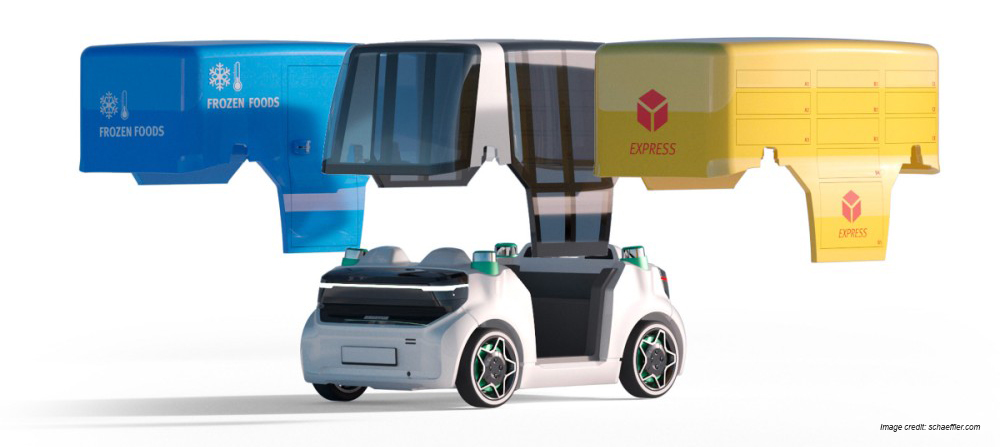
Enabling optimization in new mobility services – Striving to launch new mobility services (autonomous, electrified, and shared), industry players can also simulate their latest offerings in the digital twin environment. Schaeffer’s autonomous Mover equipped with Space Drive technology uses digital twin of the vehicle that mirrors the real-world vehicle in a cloud. Connected operations are achieved by continuously analyzing the performance and conditions data.
PAVE360 extends digital twin simulation beyond processors to include automotive hardware/software sub-systems, sensor data fusion, traffic flows, and simulation of smart cities around self-driving cars. It also enables manufacturers to develop custom SoCs, optimized for performance, cost, power, and advanced features necessary for autonomous mobility.
Capitalizing on analytics for performance forecasting –Both, industry leaders and startups are capitalizing on the digital twin opportunity. Twaice, a Munich-based startup, is developing ‘predictive analytics’ software to help with battery management in electric vehicles. It has raised €2 million in additional seed funding. The company’s software creates digital twin of battery systems by utilizing time-continuous sensors data to predict, simulate, and optimize the battery’s lifetime.
Enabling optimization in new mobility services – Striving to launch new mobility services (autonomous, electrified, and shared), industry players can also simulate their latest offerings in the digital twin environment. Schaeffer’s autonomous Mover equipped with Space Drive technology uses digital twin of the vehicle that mirrors the real-world vehicle in a cloud. Connected operations are achieved by continuously analyzing the performance and conditions data.
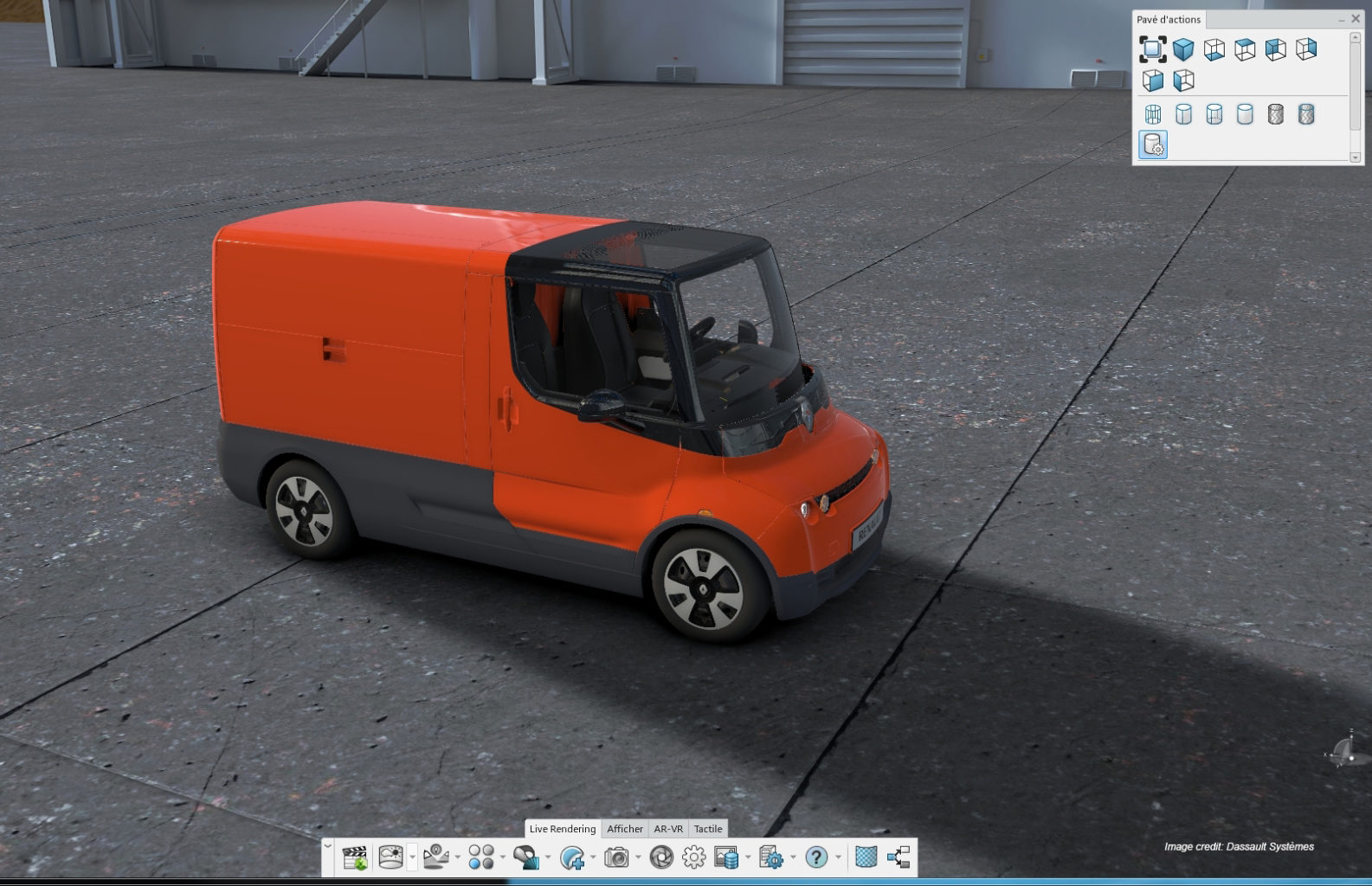
 Renault for its Last-Mile Delivery Vehicle used Dassault Systèmes platform to design improved and efficient mobility solution for delivery in urban areas. Further, the OEM was able to augment digital twin technology with immersive virtual reality and information intelligence to validate product aesthetics and technical requirements, as well as analyze market trends. Digital twin, therefore, are not the end goal, but a starting point for the collaborative application of a plethora of digital tools in the automotive world.
 Gearing up for future needs – By leveraging the latest innovations in high-performance computing, cloud services, edge processing, deep learning, and analytics, industry players are exploring new ways of implementing digital twin. For example, Process Digital Twin is seen as an evolutionary step from traditional product twin, encompassing the entire production environment. It uses mixed reality, artificial intelligence, and high-performance computing to optimize the equipment as well as the entire manufacturing process. Technologies, such as blockchain, can also be used in combination with digital twin to facilitate secure implementation with a high degree of transparency and data integrity.
Conclusively, as data stream from vehicles, transportation infrastructure, and vehicle manufacturing increases, the fidelity of digital twin will grow, which, in turn, will enable viable use cases and offerings. Enhanced capabilities will unlock unimagined functionalities and value potential for OEMs and suppliers in the automotive industry value chain.
Gearing up for future needs – By leveraging the latest innovations in high-performance computing, cloud services, edge processing, deep learning, and analytics, industry players are exploring new ways of implementing digital twin. For example, Process Digital Twin is seen as an evolutionary step from traditional product twin, encompassing the entire production environment. It uses mixed reality, artificial intelligence, and high-performance computing to optimize the equipment as well as the entire manufacturing process. Technologies, such as blockchain, can also be used in combination with digital twin to facilitate secure implementation with a high degree of transparency and data integrity.
Conclusively, as data stream from vehicles, transportation infrastructure, and vehicle manufacturing increases, the fidelity of digital twin will grow, which, in turn, will enable viable use cases and offerings. Enhanced capabilities will unlock unimagined functionalities and value potential for OEMs and suppliers in the automotive industry value chain.
Through the continuous collection, analysis, contextualizing, and acting upon production data, OEMs in the automotive industry are improving their production processes and design models. Producing more robust designs enables manufacturers to draft improved specifications and account for real conditions in their assembly process.
Pushing the boundaries of designing components and systems – Moving beyond designing vehicle body components and structures, digital twin also help in designing integrated circuits, control systems, etc. For example, Siemens PAVE360 pre-silicon autonomous validation environment enables the development of System-on-a-Chip (SoCs) for autonomous vehicle platforms.PAVE360 extends digital twin simulation beyond processors to include automotive hardware/software sub-systems, sensor data fusion, traffic flows, and simulation of smart cities around self-driving cars. It also enables manufacturers to develop custom SoCs, optimized for performance, cost, power, and advanced features necessary for autonomous mobility.
Capitalizing on analytics for performance forecasting –Both, industry leaders and startups are capitalizing on the digital twin opportunity. Twaice, a Munich-based startup, is developing ‘predictive analytics’ software to help with battery management in electric vehicles. It has raised €2 million in additional seed funding. The company’s software creates digital twin of battery systems by utilizing time-continuous sensors data to predict, simulate, and optimize the battery’s lifetime.
Enabling optimization in new mobility services – Striving to launch new mobility services (autonomous, electrified, and shared), industry players can also simulate their latest offerings in the digital twin environment. Schaeffer’s autonomous Mover equipped with Space Drive technology uses digital twin of the vehicle that mirrors the real-world vehicle in a cloud. Connected operations are achieved by continuously analyzing the performance and conditions data.
Renault for its Last-Mile Delivery Vehicle used Dassault Systèmes platform to design improved and efficient mobility solution for delivery in urban areas. Further, the OEM was able to augment digital twin technology with immersive virtual reality and information intelligence to validate product aesthetics and technical requirements, as well as analyze market trends. Digital twin, therefore, are not the end goal, but a starting point for the collaborative application of a plethora of digital tools in the automotive world.
Gearing up for future needs – By leveraging the latest innovations in high-performance computing, cloud services, edge processing, deep learning, and analytics, industry players are exploring new ways of implementing digital twin. For example, Process Digital Twin is seen as an evolutionary step from traditional product twin, encompassing the entire production environment. It uses mixed reality, artificial intelligence, and high-performance computing to optimize the equipment as well as the entire manufacturing process. Technologies, such as blockchain, can also be used in combination with digital twin to facilitate secure implementation with a high degree of transparency and data integrity.
Conclusively, as data stream from vehicles, transportation infrastructure, and vehicle manufacturing increases, the fidelity of digital twin will grow, which, in turn, will enable viable use cases and offerings. Enhanced capabilities will unlock unimagined functionalities and value potential for OEMs and suppliers in the automotive industry value chain.