

What Are Biomaterials?
Biomaterials Insight | Strategic Primer
What are biomaterials and why does material class selection matter so much in medical devices?
The material class selection decision shapes the regulatory pathway, manufacturing strategy, IP position and clinical outcome.
A biomaterial is a natural or synthetic material engineered to interact with biological systems for therapeutic or diagnostic use, but commercial viability depends on far more than biocompatibility alone.
A viable biomaterial must also deliver stable performance after sterilisation, consistent scale-up into commercial manufacturing, a clear regulatory evidence pathway, and seamless integration with device design, processing and supply strategy.
Unlike conventional materials, biomaterials operate under multi-dimensional constraints. Mechanical performance, biological response, degradation profile and regulatory classification must align from the outset, making material selection a high-impact strategic decision.
The main categories of biomaterials
The five types of biomaterials are polymers, metals and alloys, ceramics and bioactive glass, composites, and natural or bio-derived materials. The table below maps each to its key materials, primary clinical uses and a commercially available device example.
| Type | Key Materials | Primary Clinical Use | Commercial Device Example | Status |
|---|---|---|---|---|
| Polymers | PLA, PLGA, PEEK, hydrogels, silicone | Sutures, fixation devices, drug delivery, scaffolds, long-term implants, biodegradable polymer scaffolds | Zimmer Biomet resorbable interference screw (PLGA) | Commercial |
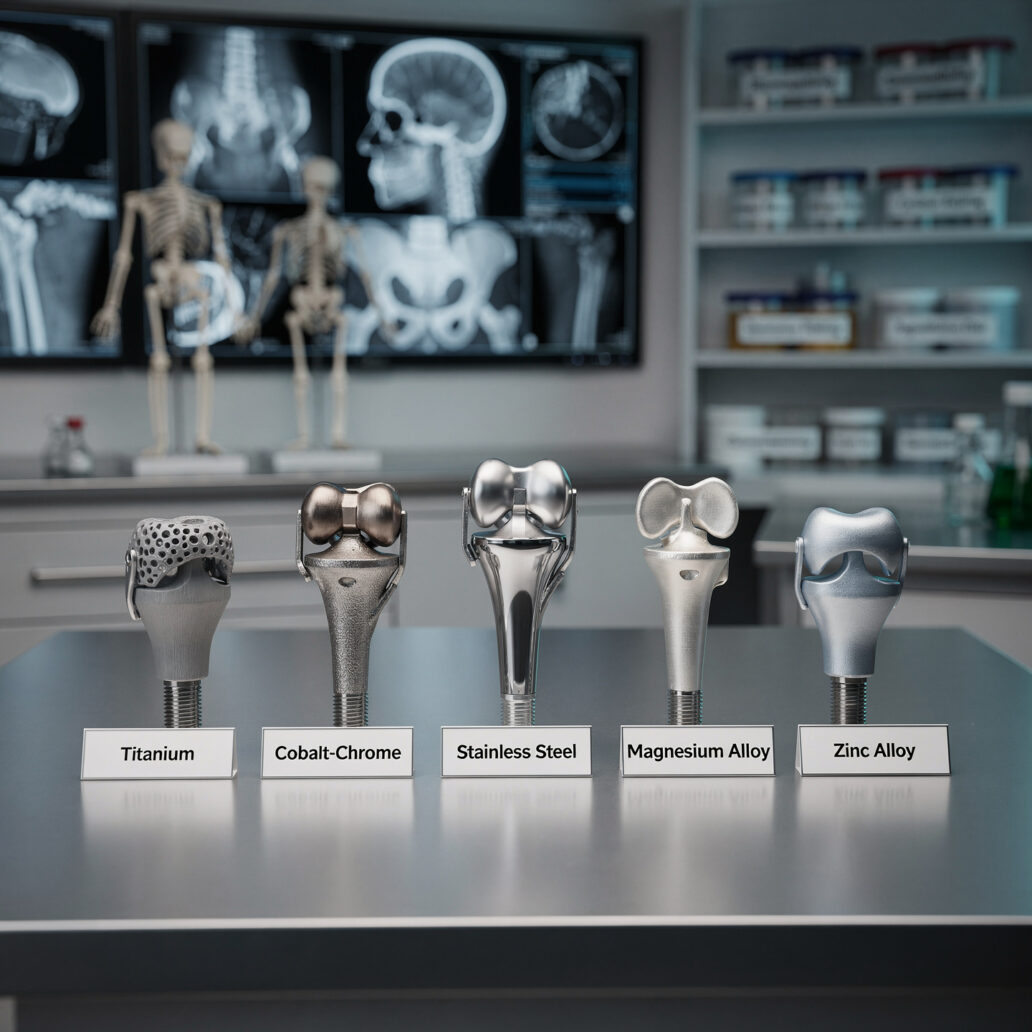
| Metals & Alloys | Ti-6Al-4V, CoCr, 316L stainless steel, Mg alloys | Orthopedic implants, spinal systems, dental fixtures, cardiovascular, titanium, CoCr and biodegradable metal implants | DePuy Synthes SUMMIT Titanium spine system (Ti-6Al-4V) | Commercial |
| Ceramics & Bioactive Glass | Hydroxyapatite, zirconia, bioglass | Bone regeneration, dental implants, osseointegration coatings, hydroxyapatite and bioactive glass implants | Nobel Biocare TiZr dental implant (HA-coated) | Commercial |
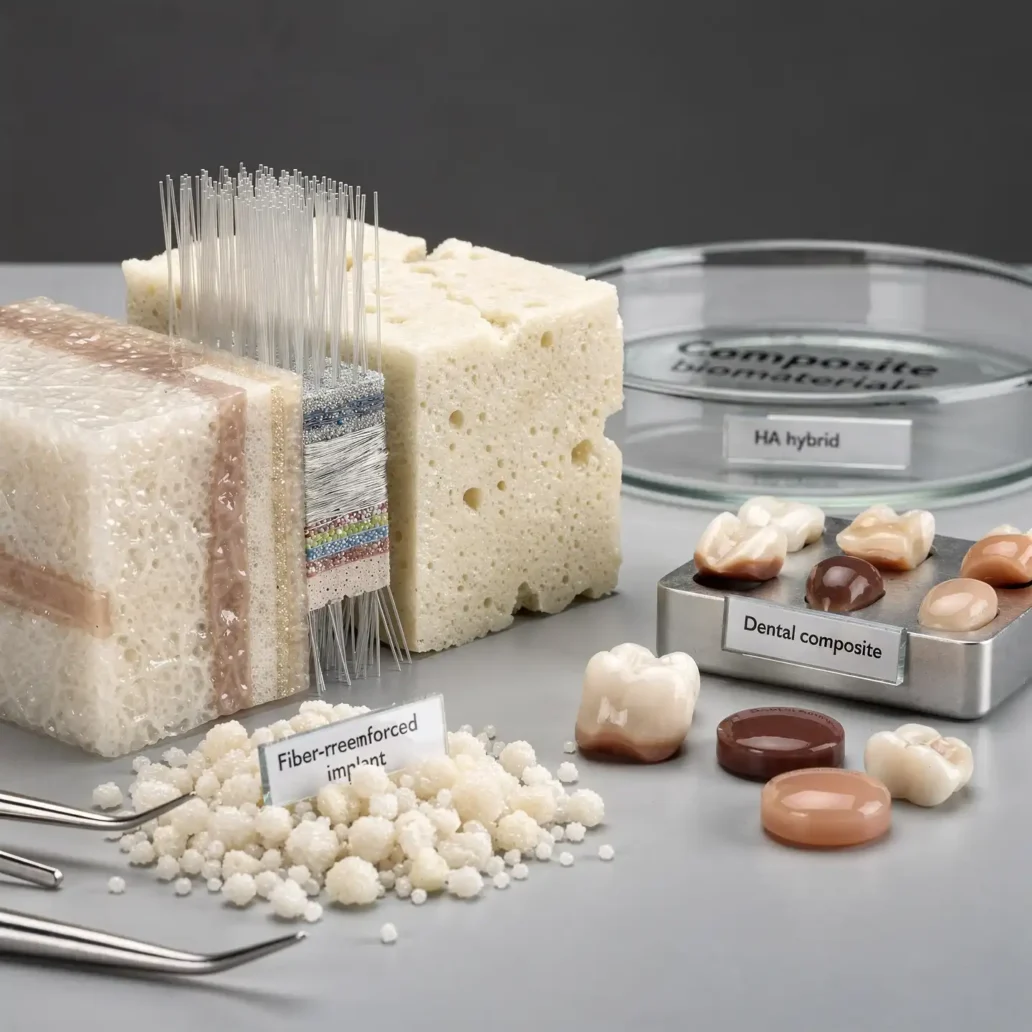
| Composites | HA-PEEK, fiber-reinforced polymers, dental resins | Spinal cages, dental restorations, load-bearing scaffolds, fiber-reinforced and composite implants | Invibio PEEK-OPTIMA spinal interbody cage | Commercial |
| Natural / Bio-derived | Collagen, chitosan, decellularised ECM, silk fibroin | Wound care, tissue engineering, regenerative medicine | Integra Dermal Regeneration Template (collagen-GAG matrix) | Commercial |
A strategic framework to select the right biomaterial class
The scoring framework below maps five material classes against seven selection criteria that matter in a real R&D programme. Scores are indicative and based on general class properties. Specific grades, processing routes and application contexts will shift individual scores.
Score key: 5 = strong fit / low risk | 3 = moderate fit / manageable | 1 = poor fit / high risk
| Selection Criteria | Polymers | Metals & Alloys | Ceramics | Composites | Natural / Bio |
|---|---|---|---|---|---|
| Load-bearing mechanical strength | 2 | 5 | 3 | 4 | 1 |
| Degradation control (temporary use) | 5 | 3 | 2 | 3 | 4 |
| Biocompatibility track record | 4 | 4 | 5 | 3 | 4 |
| Manufacturing scalability | 5 | 4 | 3 | 3 | 2 |
| Regulatory pathway clarity | 4 | 5 | 4 | 3 | 3 |
| IP landscape openness | 3 | 3 | 4 | 3 | 4 |
| Cost at commercial volume | 4 | 3 | 3 | 3 | 2 |
The right material choice aligns with the priorities of the specific indication, regulatory market and manufacturing context.
The most common mismatches arise from overlooking regulatory pathway clarity and manufacturing scalability. Optimising only for scientific performance in early stages often creates risks that emerge later at scale.
Major mistakes in early biomaterial selection
These are not edge cases. They appear repeatedly in biomaterials programmes across large MedTech organisations, and each one is avoidable with earlier, more systematic decision-making.
1. Selecting on scientific performance alone
A material that is tuneable at lab scale can behave very differently under commercial processing and industrial sterilisation. Gamma irradiation can change polymer chain length. EtO can leave residues. Discovering terminal sterilisation incompatibility late in development is a pipeline-ending problem.
Fix: Map sterilisation compatibility and scalability requirements at material selection, not manufacturing validation.
2. Delaying regulatory classification
The material class helps determine whether a device lands in Class II or Class III, and whether EU MDR accepts equivalence or requires full clinical investigation. Novel composites and natural materials often introduce evidence burdens that can add years and budget.
Fix: Run regulatory pre-classification across FDA and EU MDR before the programme is scoped and budgeted.
3. Starting without an FTO position
Biodegradable metals, smart hydrogels and HA-polymer composites all sit in fast-moving IP spaces. A material combination that looked open 36 months ago may now face blocking patents at the formulation, processing or application level.
Fix: Commission a patent landscape and FTO analysis at material class selection, and update it annually in fast-moving spaces.
Regulatory mapping by material class
The regulatory pathway for a medical device is not determined by intended function alone. The material class is a primary driver of classification, evidence requirements and approval timeline.
| Material Class | Primary ISO Standard | FDA Device Class | EU MDR Pathway | Key Implication |
|---|---|---|---|---|
| Polymers | ISO 10993 + ISO 13485 | II or III (application-dependent) | Annex I + clinical evidence; PFAS restrictions apply | PLGA and PLA are well-precedented; novel polymer matrices need a full biocompatibility workup. |
| Metals & Alloys | ISO 10993 + ASTM F136 (Ti), F75 (CoCr) | II or III | MDR Article 61; long clinical history supports CER | Biodegradable Mg/Zn are treated as novel; there is no substantial equivalence shortcut. |
| Ceramics | ISO 10993 + ISO 6474 (zirconia), ISO 13779 (HA) | II or III | MDR Annex I + biocompatibility data | HA-coated devices may split classification between coating and substrate. |
| Composites | ISO 10993 + component-specific standards | Case-by-case; often Class III | Novel combination product pathway; no single precedent | Each constituent material needs independent biocompatibility assessment. |
| Natural / Bio-derived | ISO 10993 + ISO 22442 (animal tissues) | Often Class III | Special notified body scrutiny; animal origin triggers extra traceability | Batch-to-batch consistency is a GMP and regulatory requirement, not just a QA issue. |
Two regulatory watchpoints that matter especially in 2026
- Biodegradable metals such as magnesium and zinc fall under the metals row but are treated as novel materials by both FDA and EU MDR, so there is no substantial equivalence shortcut.
- The EU REACH PFAS restriction affects several polymer processing aid formulations already used across commercial device lines, creating reformulation programmes that may directly trigger regulatory resubmission.
Key medical device applications of biomaterials
Biomaterials sit at the foundation of every major clinical device category. Understanding the application landscape helps frame which class properties matter most for a given programme.
Orthopedic implants
Hip and knee prostheses, resorbable fixation screws and anchors, bone graft substitutes and load-bearing systems across metals, ceramics, polymers and composites.
Dental devices
Titanium implant fixtures, zirconia and PEEK crowns or abutments, hydroxyapatite bone grafts and filled composite restorations.
Cardiovascular
Stents, biodegradable polymer systems, bioresorbable metals in development, heart valves and vascular grafts based on polymers and decellularised tissue.
Drug delivery
Controlled-release depots, hydrogel carriers and microsphere formulations for localised therapeutic delivery.
Tissue engineering and wound care
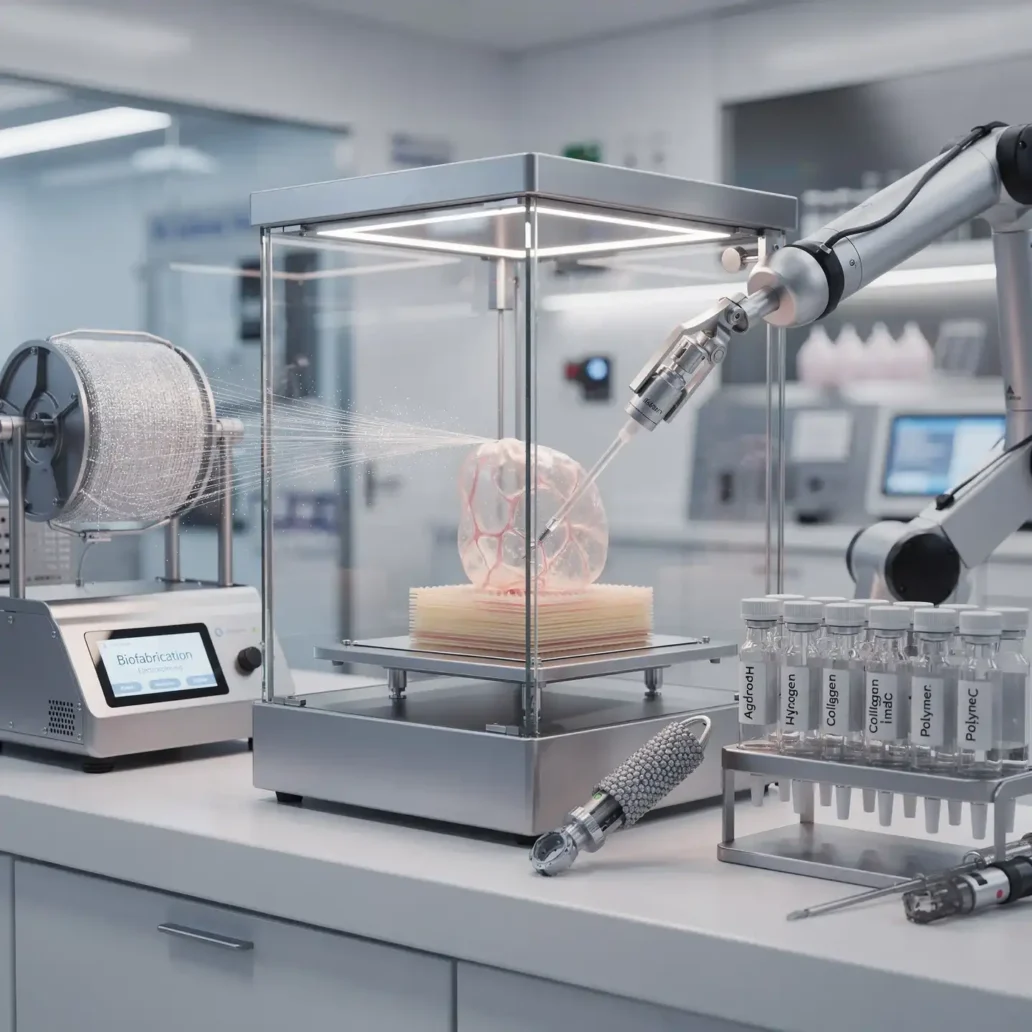
Collagen, chitosan, PLGA and HA-polymer scaffold structures, skin substitutes and nerve conduits. See also: Biofabrication & Clinical Applications of Biomaterials.
Emerging clinical applications
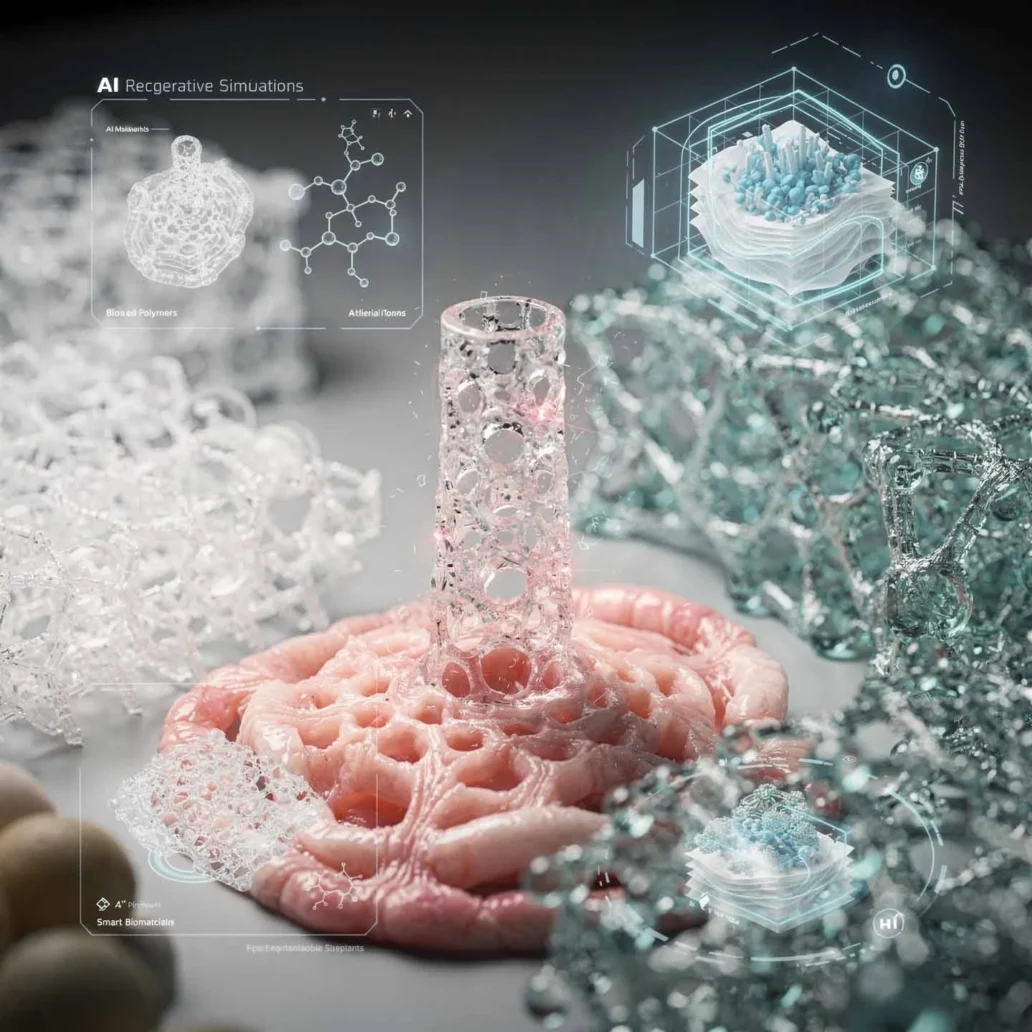
Neural interfaces, biodegradable wireless sensors and bioprinted patient-specific scaffolds for craniofacial and cartilage repair are moving beyond concept stage. See: Active, Adaptive, and Regenerative Biomaterials.
Conductive biomaterials for neural interfaces and biodegradable sensors for remote monitoring are not just research concepts. Several programmes are already in active clinical trials in 2026, and the material class choices being made now will define competitive positions over the next decade.
Leveraging biomaterials for competitive advantage
Understanding biomaterial classes is only the starting point. The real challenge is translating that knowledge into better development decisions, selecting the right material early, anticipating regulatory and IP risks, and building visibility into emerging innovation.
FutureBridge 2026 report, Navigating the Biomaterial Challenge, outlines a full strategic framework covering material selection, challenge mapping, commercialisation tools and ecosystem intelligence.
FutureBridge 2026 Report
Navigating the Biomaterial Challenge
The strategic framework for R&D and innovation leaders: material class analysis, challenge mapping, commercialisation decision tools and ecosystem intelligence.
Frequently asked questions
What are biomaterials?
A biomaterial is any natural or synthetic material engineered to interact with a biological system for a therapeutic or diagnostic purpose. For medical device use, it must satisfy biocompatibility, a controlled stability or degradation profile matched to the indication, and compliance with the regulatory requirements of each market it enters. Common examples include titanium hip implants, PLGA resorbable sutures, hydroxyapatite bone grafts, silicone breast implants and collagen wound dressings.
What are the 5 types of biomaterials?
The five types of biomaterials are polymers, metals and alloys, ceramics and bioactive glass, composites, and natural or bio-derived materials. Each class serves distinct clinical roles determined by mechanical requirements, degradation behaviour, biocompatibility profile and regulatory classification pathway.
How do biomaterials differ from conventional engineering materials?
Conventional engineering materials are typically selected for mechanical, thermal or chemical performance in non-biological environments. Biomaterials must meet those same requirements and also satisfy tissue compatibility, immune response constraints, controlled degradation or biostability, sterilisability without property alteration and regulatory compliance in each target market.
What criteria do R&D teams use to select a biomaterial class?
The most consequential criteria are mechanical load requirements, whether temporary or permanent presence is needed, regulatory classification and evidence burden, manufacturing scalability, sterilisation compatibility at commercial volume and the IP landscape including freedom-to-operate. Early mistakes usually happen when teams optimise for performance but underweight scalability and pathway complexity.
What is the regulatory pathway for biomaterials in medical devices?
The regulatory pathway depends on both intended clinical use and material class. Under FDA, most biomaterial-based devices fall into Class II or Class III. Under EU MDR, novel biomaterials without substantial clinical history may require a full clinical investigation. Core standards include ISO 10993 for biocompatibility, ISO 13485 for quality management, and material-specific standards such as ASTM F136 for titanium alloys and ISO 6474 for zirconia ceramics.