

Biomaterials in Medical Devices: Innovation, Challenges & Strategic Opportunities
Biomaterials in Medical Devices: Innovation, Challenges & Strategic Opportunities
The biomaterials market has crossed $200 billion, but the real challenge for R&D leaders is not discovery, it is execution at scale.
Breakthrough materials often fail to become viable medical devices due to integration complexity, regulatory hurdles, and supply chain constraints.
Winning now depends on aligning material science with device design, regulatory strategy, and scalable manufacturing from the outset.
The core challenge in biomaterials is not innovation, but converting laboratory breakthroughs into commercially viable solutions.
Figures indicative; align with internal regulatory and market assumptions before publication.
What Are Biomaterials?
A biomaterial is an engineered substance designed to interact with biological systems for therapeutic or diagnostic use, but its complexity goes far beyond that definition. It must meet mechanical needs while ensuring biocompatibility, controlled degradation aligned with healing, and strict regulatory compliance.
These factors make translating lab breakthroughs into scalable medical devices a persistent challenge in MedTech.
Polymers, metals, ceramics, composites, and bio-derived materials form the core classes, each requiring precise alignment with clinical application.
Mechanical fit
Performance under real use conditions
Material strength, flexibility, fatigue resistance, wear behaviour, and structural geometry must meet the relevant clinical loading environment.
Biological fit
Safety, integration, and healing
The material must support intended tissue response while avoiding harmful immune reactions, unsuitable degradation products, and long-term biological uncertainty.
Regulatory fit
Evidence aligned to classification
Novel materials, biological components, and active functionality can change the evidence burden, product classification, and route to market.
Scale-up fit
Repeatability at commercial volume
Feedstock quality, sterilisation, packaging, shelf life, and process control must preserve material properties through commercial manufacture.
The 5 Core Types of Biomaterials in Medical Devices
Polymers
PLA, PGA, PLGA, hydrogels, silicone. The most versatile class. Biodegradable polymers provide temporary mechanical support in sutures, fixation devices, and drug delivery scaffolds. Biostable polymers, polyethylene and silicone chief among them, underpin long-term implants. Precise control of degradation rate and porosity is the core engineering challenge.
Metals and Alloys
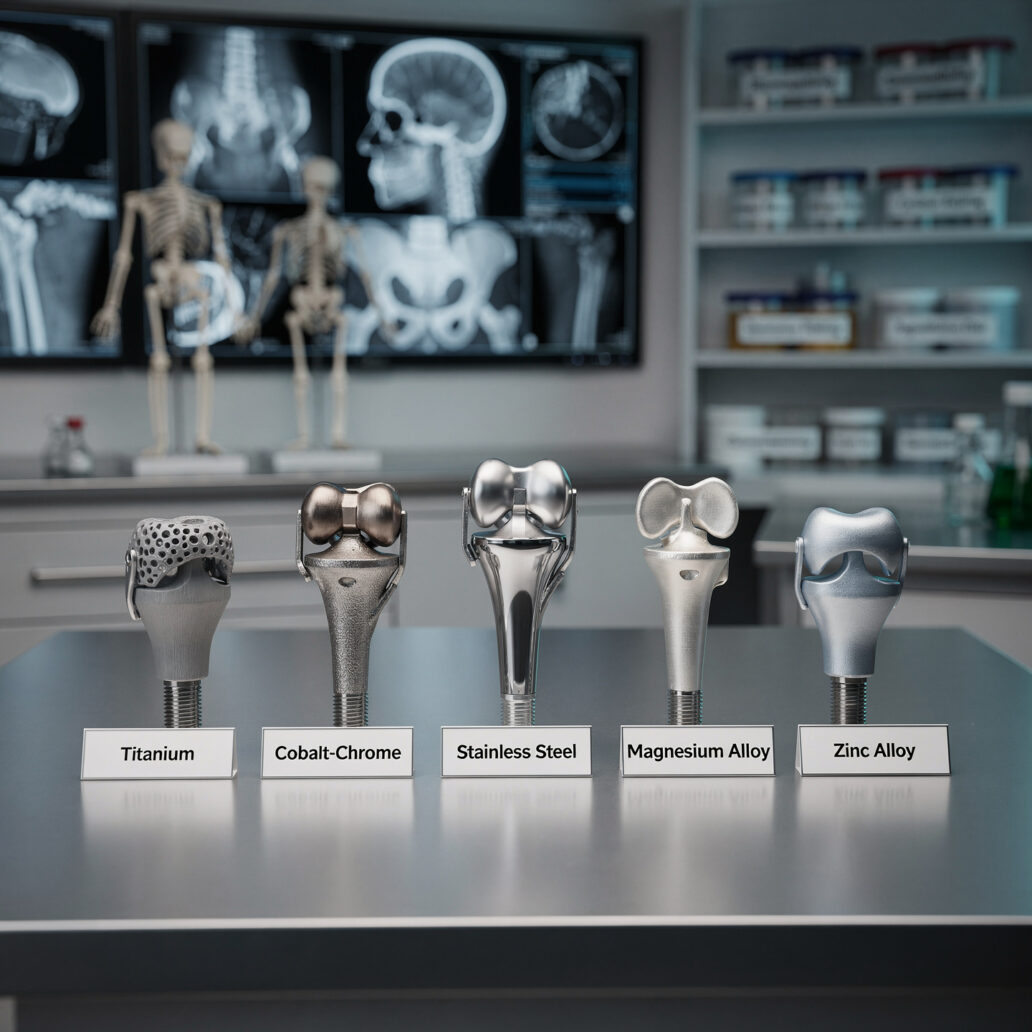
Titanium, CoCr, stainless steel, magnesium, zinc. Still essential for load-bearing applications that polymers and ceramics cannot handle alone. Biodegradable metals, particularly magnesium and zinc alloys, are gaining real traction in temporary fixation, removing the clinical and economic burden of revision surgery.
Ceramics and Bioactive Glass
Hydroxyapatite, bioglass, zirconia. Valued for osteoconductivity and chemical similarity to natural bone mineral. Primary applications span bone regeneration, dental implants, and osseointegration coatings on metal devices. Bioactive glasses add antibacterial properties relevant in wound care.
Composites
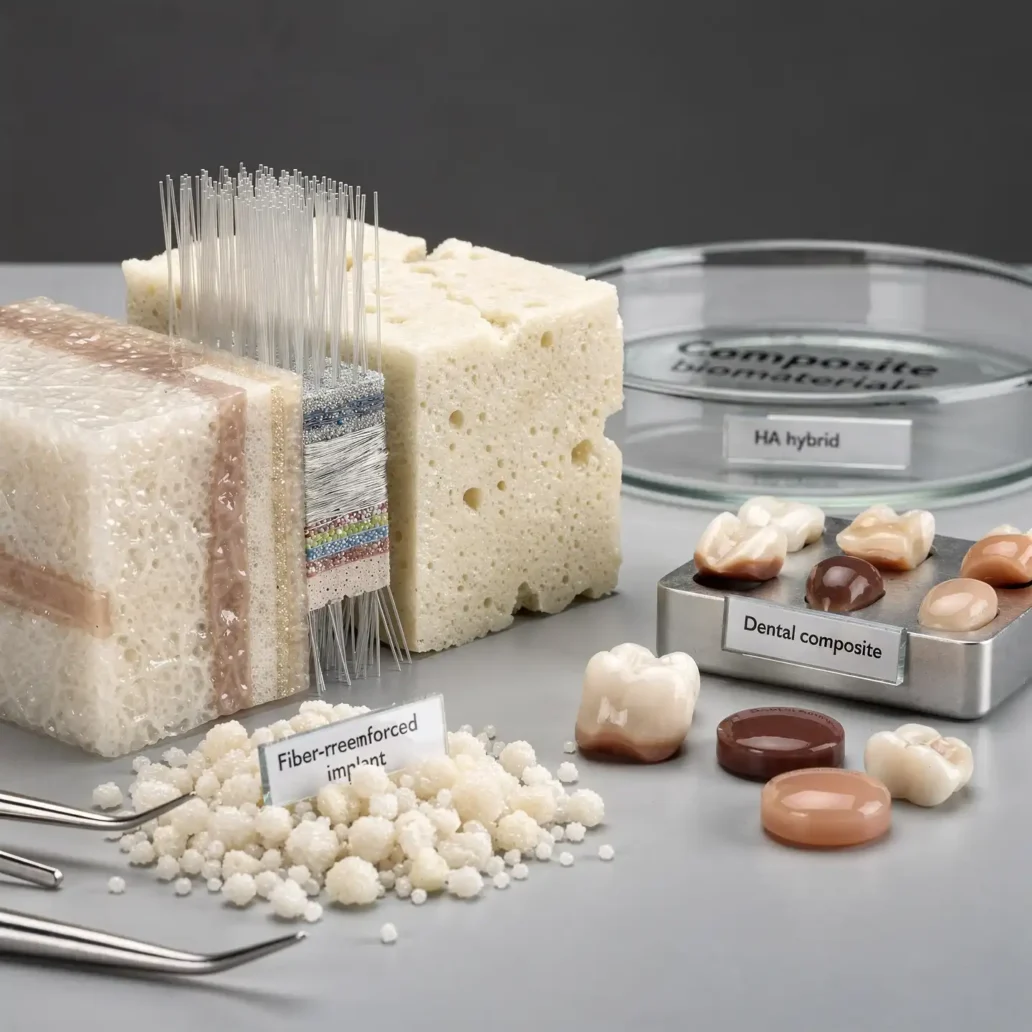
Fiber-reinforced polymers, HA-polymer hybrids, dental resins. Designed to combine the mechanical strength of one material class with the bioactivity of another. The dental composite filling is the most commercially mature example. Fiber-reinforced PEEK for spinal cages represents the current clinical frontier.
Natural and Bio-Derived Materials
Collagen, chitosan, silk fibroin, decellularised matrix. Inherently biocompatible and increasingly central to tissue engineering, wound care, and regenerative medicine platforms. Batch consistency challenges are real, but the biological performance case is compelling.
Key Medical Device Applications
Biomaterials form the foundation of modern medical devices, with platform choices shaping entire product portfolios, not just individual products.
Current applications span orthopedics, dental, cardiovascular devices, drug delivery, and tissue engineering.
Emerging areas such as neural interfaces, smart hydrogels, and bioprinted scaffolds are already entering clinical development.
These are near-term realities, with several technologies advancing through clinical trials today.
Biomaterials Market: Size, Growth and Key Drivers
The global biomaterials market exceeds $200 billion, with biodegradable implants alone reaching $2.8 billion and continuing to grow.
The below three forces are shaping this expansion and influencing R&D investment decisions.
Clinical economics
Eliminating revision surgery
Biodegradable implants reduce the need for revision surgeries, lowering cost and clinical risk.
Regulation and reimbursement
Regulatory and payer pressure
Regulatory and payer focus has shifted toward total cost of care, favoring materials that minimize complications and readmissions.
Procurement
Sustainability as a procurement criterion
Sustainability is now a formal procurement criterion, with renewable sourcing and lifecycle impact influencing supplier selection across major health systems.
Key Challenges Limiting Widespread Adoption of Biomaterials
The science of biomaterials has moved faster than the industry’s ability to commercialize it. Three challenges account for most of that gap.
Biological Performance and Safety Uncertainty
Biocompatibility results in controlled settings do not always reflect real patient immune responses. Long-term degradation, including by-product toxicity and systemic impact, remains difficult to predict. Balancing mechanical strength with bioresorption often forces trade-offs that influence clinical outcomes and development timelines.
Challenges in Manufacturing at Scale
A material that performs well at pilot scale often behaves differently at commercial volumes. Sterilization can alter properties; shelf-life limits flexibility, and bio-based feedstocks introduce consistency challenges. This manufacturing gap between lab success and scale is where many promising biomaterials fail.
Regulatory and Adoption Barriers
Novel biomaterials face a high evidence burden, requiring extensive safety and performance data and long, costly clinical trials. Even after approval, clinician adoption remains slow due to reliance on established materials. Each stage adds time and cost beyond typical development expectations.
Strategic Opportunities Shaping the Next Decade
The same challenges constraining today’s pipelines are creating tomorrow’s competitive advantages for companies that address them early.
Biodegradable metals offer near-term potential with a still-open IP window, though it is narrowing quickly.
Material platform strategies enable cost-efficient scale by spreading regulatory effort across portfolios.
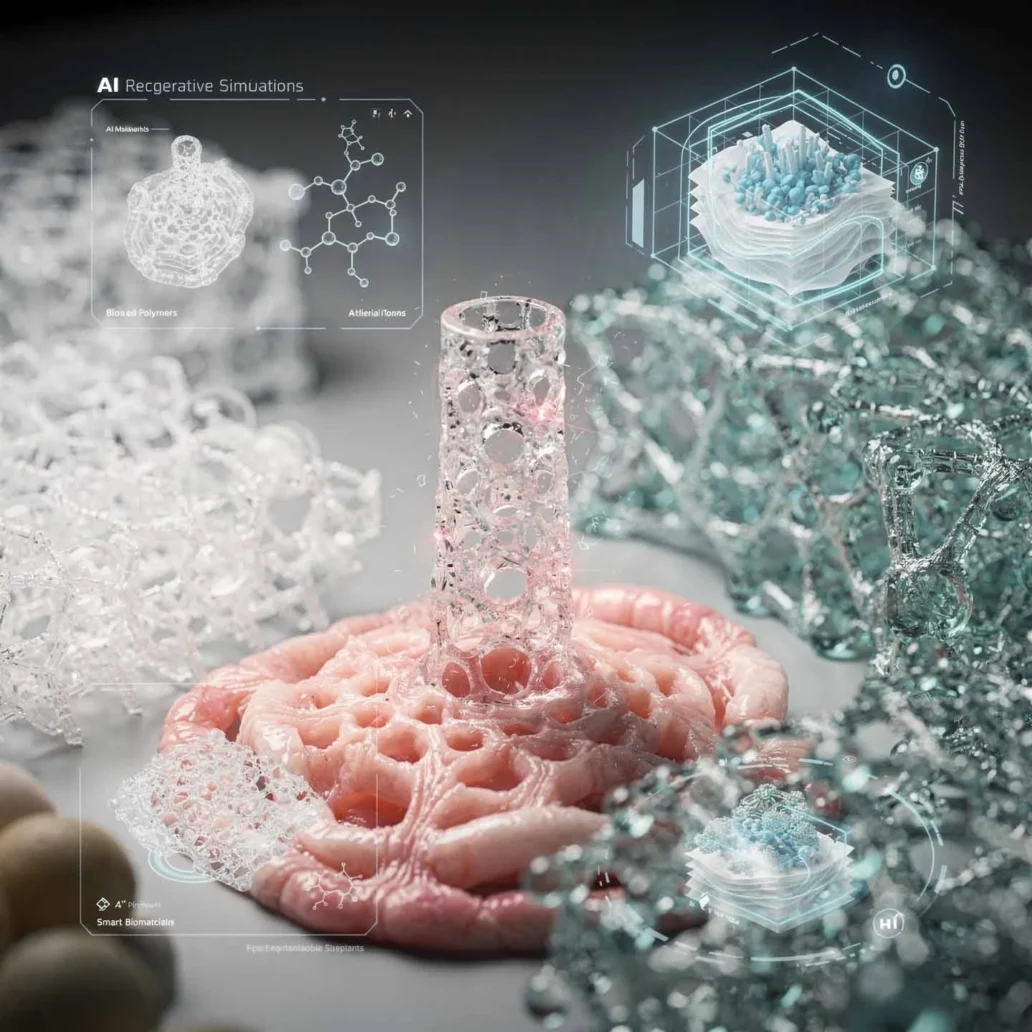
AI-driven materials discovery is accelerating development timelines, while digital integration, sustainability, and ecosystem partnerships are shaping the next phase of competitive differentiation.
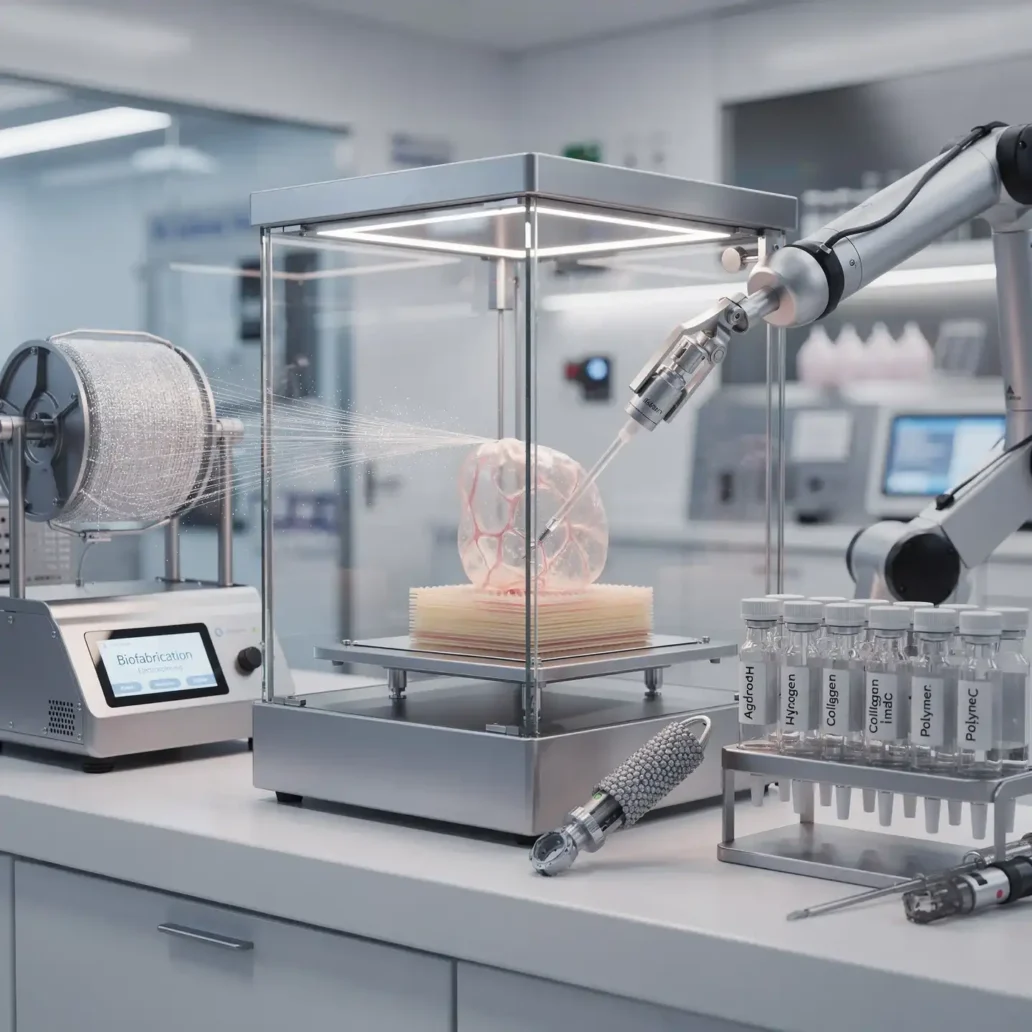
Explore biofabrication and next-gen clinical applications and
biomaterials market trends and investment signals.
Next-Gen Biomaterials: Horizon Map for R&D Planning
Five material platforms merit active roadmap attention.
The table below maps each against commercialisation horizon, based on current clinical trial status, regulatory precedent, and manufacturing readiness.
| Material Platform | Near-Term (0-3 yrs) | Mid-Term (3-7 yrs) | Horizon (7+ yrs) |
|---|---|---|---|
| Biodegradable Metals (Mg, Zn) | Orthopedic fixation devices in EU, APAC | Cardiovascular stents with sensor integration | Fully bioresorbable load-bearing implants |
| Smart Hydrogels | Wound care with controlled drug release | In-situ diagnostic sensors | Real-time therapeutic adjustment platforms |
| Bioprinted Scaffolds | Patient-specific bone segments (skull, facial) | Soft tissue constructs: cartilage, meniscus | Vascularised organ patches |
| Conductive Biomaterials | Peripheral nerve repair conduits | Cardiac patch for myocardial infarction | Neural interface for CNS repair |
None of the near-term applications in this table are speculative. All have clinical precedents or active trials. The mid-term and horizon columns reflect where the R&D investment decisions made today will determine whether your organisation is a leader or a follower.
Case Study: Turning Biomaterial Supply Risk into Strategic Advantage
Client Challenge
A fast-moving biomaterials landscape
A leading global healthcare company in soft tissue repair, wound care, and regenerative medicine faced a challenge familiar to many large MedTech organizations.
The biomaterials landscape was evolving faster than internal tracking capabilities. Supply security remained uncertain, competitive disruptions were hard to anticipate, and partnerships were formed reactively rather than strategically.
FutureBridge Approach
Ecosystem mapping and stakeholder prioritisation
Mapped the global biomaterials ecosystem across material classes and applications, assessing players on performance, fit, and manufacturing capability.
Segmented stakeholders by innovation focus and scale, identifying high-potential partners, acquisition targets, and whitespace opportunities.
Client Impact
A future-ready biomaterials strategy
A future-ready biomaterials strategy anchored in real market intelligence.
Built a future-ready biomaterials strategy grounded in market realities, with clear visibility of near- and long-term risks.
Improved sourcing and partnership decisions through targeted identification of high-potential partners and acquisition targets.
FutureBridge Report
Navigating the Biomaterial Challenge
Navigating the Biomaterial Challenge shares the detailed solution framework for R&D and innovation leaders working to close the gap between biomaterial innovation and commercial success. Get your copy now.
Frequently Asked Questions
What are biomaterials?
A biomaterial is an engineered substance designed to interact with biological systems for a therapeutic or diagnostic purpose. Unlike conventional materials selected purely for mechanical or chemical properties, biomaterials must be biocompatible, exhibit controlled degradation profiles matched to the body’s healing timeline, and satisfy regulatory requirements in every market they enter. Real-world examples include titanium hip implants, PLGA resorbable sutures, hydroxyapatite bone grafts, and collagen wound dressings.
What are the 5 types of biomaterials?
The five types of biomaterials are: polymers (PLA, PLGA, hydrogels, silicone), metals and alloys (titanium, cobalt-chromium, stainless steel, and biodegradable magnesium and zinc), ceramics and bioactive glass (hydroxyapatite, bioglass, zirconia), composites (fiber-reinforced polymers, HA-polymer hybrids, dental resins), and natural or bio-derived materials (collagen, chitosan, silk fibroin). Each class serves distinct clinical roles based on mechanical performance, degradation behaviour, and regulatory classification requirements.
Can biomaterials be used in clinical applications?
Yes, and they already are at scale across every major clinical category. Titanium and cobalt-chromium alloys are used in joint replacements globally. PLGA sutures resorb without a secondary removal procedure. Hydroxyapatite coatings promote osseointegration on dental implants. Bioprinted scaffolds and biodegradable electronic sensors are advancing through clinical trials. The commercialization challenge is not whether biomaterials work clinically; it is how to translate them reliably from laboratory to large-scale manufacturing.
How are biomaterials used in biomedical engineering?
Biomedical engineers use biomaterials as the foundational building blocks of medical devices, implants, and tissue engineering constructs. The core engineering challenge is matching the material’s mechanical, biological, and degradation properties precisely to the clinical requirement while maintaining manufacturing scalability and meeting regulatory standards. Advances in additive manufacturing, surface modification chemistry, and composite architecture have significantly expanded what biomaterials can achieve in practice over the past decade.
What does the biomaterials market look like in 2026?
The global biomaterials market has exceeded $200 billion, growing at over 15% CAGR. The biodegradable implants segment represents $2.8 billion across orthopedic and oral applications. Smart materials, bioprinting platforms, and bio-based feedstocks are attracting the most R&D and investment attention. Regulatory pressure and sustainability mandates are reshaping procurement criteria and accelerating adoption of next-generation materials.