

5 Tech Start-ups Reimagining the Future of Food
 Start-ups are finding the space between traditional brands and categories and are helping to solve real challenges in the food and beverage industry today
The food and beverage industry is one that is now actively undergoing collective change. With the industry facing its biggest challenges yet – overpopulation, climate change, pandemics, and shifting consumer demands – new food tech start-ups are working on disruptive concepts to make our nutrition more resourceful, efficient, and sustainable.
FutureBridge continuously monitors the sustainability advancements taking place across the food & nutrition industry. That’s why we have decided to profile five tech start-ups who are reimagining the future of food and working towards building a more sustainable supply chain. From circular processes to edible packaging, start-ups are providing large companies with new disruptive business models in order to become more competitive in the market.
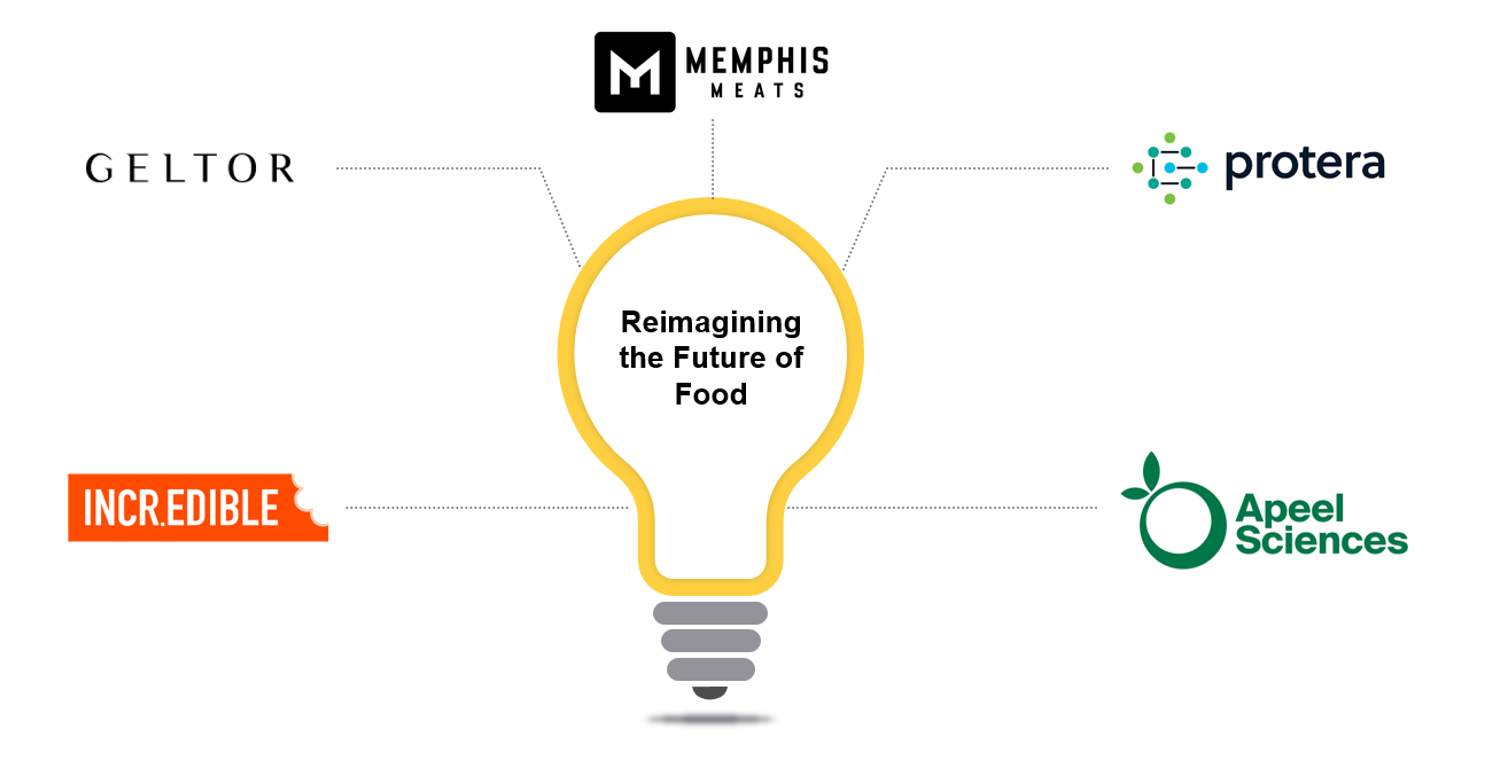
 FutureBridge’s five sustainable tech start-ups include:
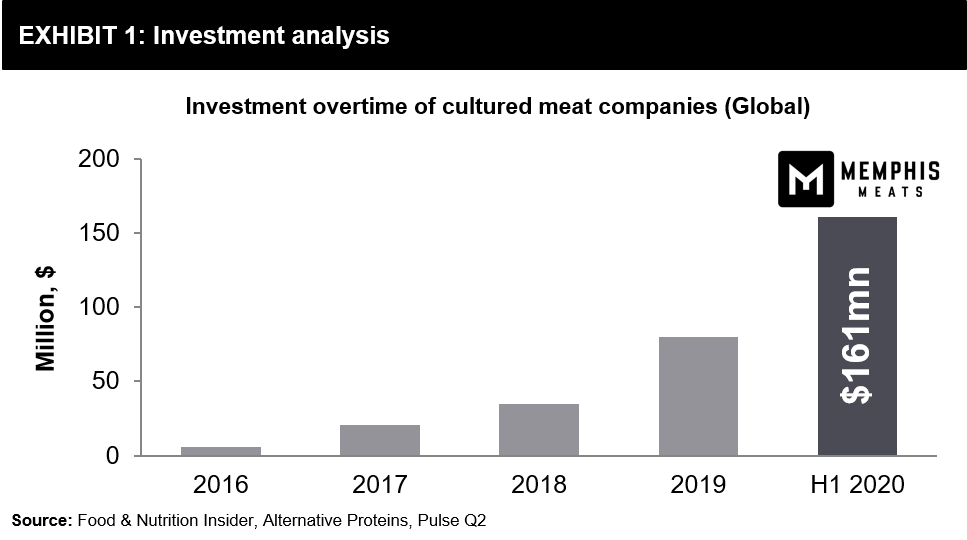
Memphis Meats Drives Cultured Meat Commercialization – Memphis Meats makes our sustainable list as it provides the first clear signal that cell-based meat is moving out of the lab and into the market as they unveil plans to build a pilot production plant after raising a record-breaking $161M in a Series B funding round.
Incr-Edible Spots Opportunity In Rice Waste – We spotlight this Dutch start-up for creating a circular economy in rice processing. Incr-edible uses a thermal treatment technology to capture the by-product of rice production and create a stabilized rice bran flour with several health benefits.
Geltor to Take on The Collagen Market – As global demand for collagen grew 25% over the past year, we spotlight the California start-up, Geltor, for providing the industry with an animal-free collagen protein alternative produced via microbial fermentation.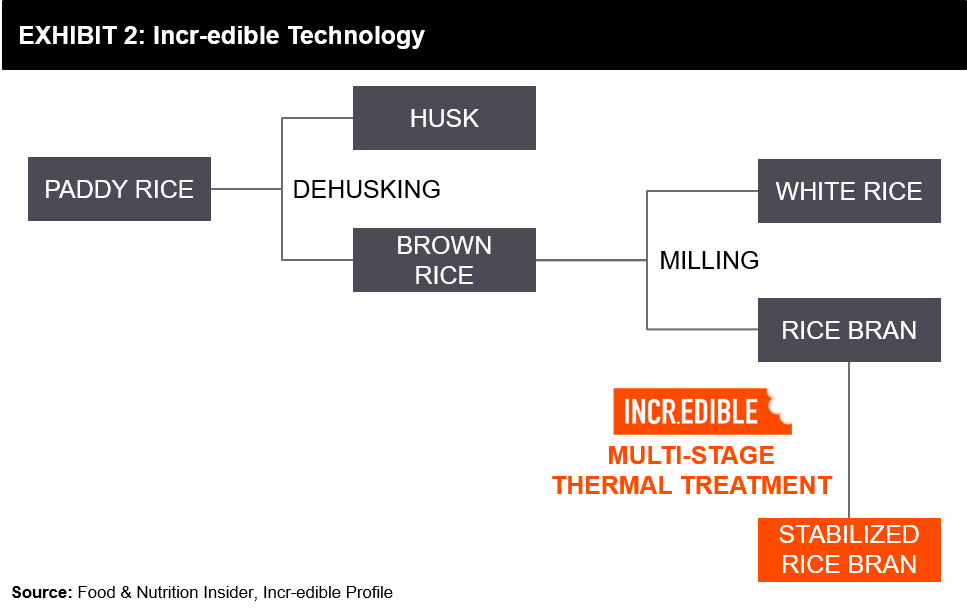
Protera Uses AI To Discover Proteins – Protera designs and develops new proteins faster and more affordably using their proprietary ‘MADI’ algorithm. Their Protera Guard product is a clean-label protein designed to extend shelf-life and reduce food waste.
Apeel Sciences Using Food To Preserve Food – Apeel Sciences, the Santa Barbara-based firm, makes our sustainable start-up list for their invisible plant-based skin that can dramatically extend the shelf-life of fresh produce and is now valued at $1B