


The Protein Boom is Moving Beyond the Claim to the Eating Occasion
Protein has left the gym bag.
Protein now influences what consumers eat for breakfast, what they choose for lunch, what they buy as an afternoon snack and what they expect from food and beverages.
For food and beverage businesses, this is an opportunity that goes far beyond traditional sports nutrition. The next phase of growth will not be decided only by the number of grams of protein in a product. It will depend on whether protein improves the consumer’s everyday eating experience at a price the consumer is ready to pay again.
The Executive View
The OpportunityProtein is moving into mainstream eating occasions and established grocery categories. |
The ChallengeHigher protein content alone does not guarantee differentiation, consumer acceptance or repeat purchase. |
The Strategic PriorityBuild products around occasions, taste, value, credible nutrition and sustainable portfolio economics. |
1. Why protein has become commercially powerful
Protein’s mainstream appeal reflects many overlapping consumer needs. Protein is linked to fitness and muscle maintenance. It also relates to satiety, healthy ageing, everyday wellbeing and convenient nutrition.
The International Food Information Council’s 2025 Food & Health Survey reported that 70 percent of Americans were trying to consume protein. This shows how far protein interest has moved beyond specialist fitness consumers.
| Demand driver | Commercial implication |
|---|---|
| Weight management | Consumers seek satisfying foods that fit their dietary goals. |
| Fitness and active lifestyles | Protein remains relevant for exercise recovery and muscle maintenance. |
| Healthy ageing | Nutrition propositions increasingly address muscle health across life stages. |
| Fragmented meals | Smaller meals and snacks create new protein delivery occasions. |
| GLP-1-related eating changes | Reduced appetite may increase interest in nutrient-dense portions. |
| Ingredient scrutiny | Consumers may evaluate protein source, formulation and overall product quality. |
2. The real opportunity is already in the grocery basket
Protein innovation does not need to create new consumption behaviors. Its strongest opportunities may emerge by improving products that consumers already buy, understand and enjoy.

| Product space | Innovation opportunity |
|---|---|
| Dairy | Everyday high-protein yogurt, milk and cultured products. |
| Ready-to-drink beverages | Convenient, enjoyable protein delivery beyond workout occasions. |
| Snacks | Portable, satisfying formats with strong taste and texture. |
| Prepared meals | Protein-rich options that support convenient lunches and dinners. |
| Breakfast | Products designed around satiety and morning routines. |
| Plant-forward foods | Balanced formulations that combine protein quality and sensory appeal. |
| Life-stage nutrition | Solutions designed for differing needs across consumer groups. |
3. Stop asking where protein can be added. Ask where protein earns its place.
Adding protein is a formulation decision. Creating a reason to buy is a commercial decision.
The most compelling innovation starts with a specific eating occasion and the consumer problem that a product is intended to solve.
| Eating occasion | Consumer need |
|---|---|
| Breakfast | Convenience and sustained satisfaction. |
| Afternoon snack | Enjoyment, portability and hunger management. |
| Post-exercise | Convenient nutrition aligned with recovery routines. |
| Lunch | Balanced nutrition without compromising convenience. |
| Evening indulgence | Enjoyable treats with an added nutritional proposition. |
| Healthy ageing | Accessible, appealing foods that support nutritional needs. |
| Reduced-appetite occasions | Nutrition delivered in manageable portions. |
The portfolio question
Where can protein make an existing consumer occasion better, and where would it merely add cost, complexity or an unnecessary claim?
4. The protein boom has a knowledge gap and a credibility opportunity
Consumer interest in protein is substantial, but interest should not be confused with nutritional understanding.
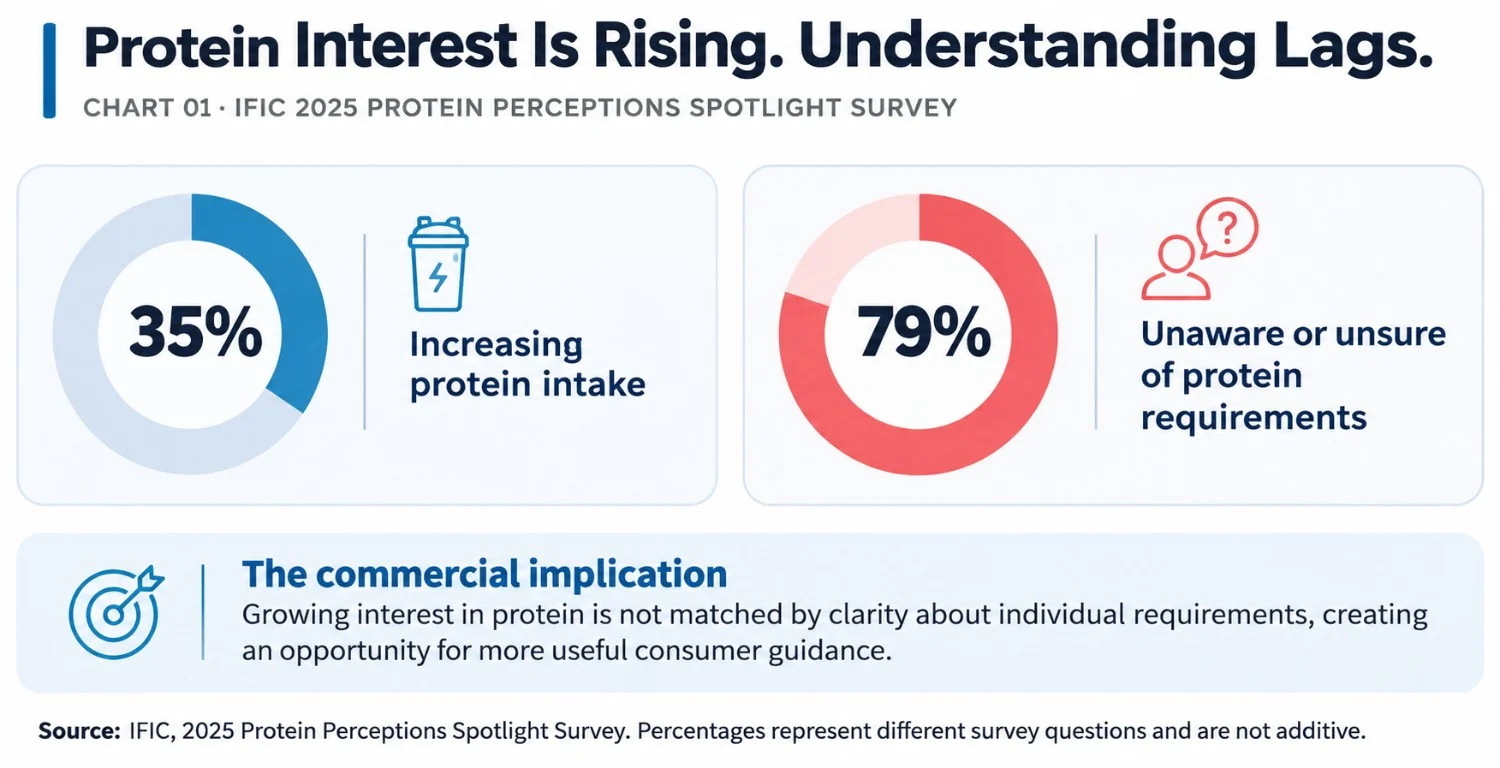
This creates an opportunity for brands to communicate clearly about protein quality, serving sizes, nutrition and product relevance. It also increases the importance of substantiated claims.
Four questions for credible innovation
- Does the product deliver a meaningful nutritional benefit?
- Is its protein proposition easy for consumers to understand?
- Does it meet expectations for taste, texture and price?
- Can the brand support its claims with appropriate evidence?
5. Where the next wave of protein innovation will emerge
Protein innovation is likely to become more sophisticated as brands move beyond quantity-led claims and address formulation quality, consumer experience and targeted nutritional benefits.
-
Protein blends
Combining protein sources can help developers balance nutritional characteristics, functionality, sensory performance and ingredient economics.
-
Sensory-led formulation
Taste, texture and mouthfeel remain critical. A protein claim may attract attention, but a disappointing eating experience can undermine repeat purchase.
-
Complementary benefits
Protein can be positioned alongside other useful product attributes, such as fiber, convenience and overall nutritional quality, as long as the message remains clear and credible.
-
Familiar protein choices
Consumers may prefer products and ingredients they recognize. Innovation should consider how protein source, ingredient perception and product familiarity are connected.
-
Life-stage propositions
Different consumer groups have different needs. Product development can address those needs through appropriate formats, portion sizes, nutritional profiles and product communication.

6. The economics of protein will separate lasting brands from opportunistic launches
Protein enrichment usually brings trade-offs. Ingredient cost, processing performance, texture, packaging, price positioning and consumer willingness to pay all need to be considered together.
A protein-enriched cookie and a high-protein breakfast product can have different commercial prospects.
The cookie must justify its premium within an indulgence occasion, while the breakfast product may connect more directly with a consumer’s functional nutrition goals.
| Decision factor | Key management question |
|---|---|
| Consumer relevance | Does protein solve an occasion-specific need? |
| Sensory performance | Will consumers enjoy the product repeatedly? |
| Price-value fit | Is the premium justified by the proposition? |
| Operational feasibility | Can the formulation scale consistently and efficiently? |
| Portfolio contribution | Will the launch strengthen margins, differentiation and long-term growth? |
7. What the next three years could look like
The following outlook is a strategic scenario rather than a quantified market forecast.
2026–2027 — Protein normalization
Protein becomes a familiar attribute across mainstream categories. Differentiation based on protein content becomes more difficult.
2027–2028 — Occasion-led portfolios
Brands organize innovation around consumer routines, specific eating occasions and stronger value propositions.
2028–2029 — Broader nutrition propositions
Protein increasingly forms part of an integrated discussion of nutritional quality, convenience, enjoyment and consumer needs.
Three factors could influence the pace of this transition: ingredient economics, evolving consumer understanding of nutrition and brands’ ability to deliver enjoyable products at accessible prices.
8. Five decisions food and beverage CEOs should make now
- Prioritize occasions over claims. Identify where protein delivers a clear consumer benefit.
- Protect sensory quality. Set taste and texture standards before approving protein-led launches.
- Build credible nutrition propositions. Ensure product claims and consumer communication are appropriately supported.
- Stress-test portfolio economics. Evaluate ingredient cost, operational complexity, price and repeat-purchase potential.
- Develop a long-term innovation roadmap. Connect protein strategy with shifts in consumer nutrition and eating behavior.
For ingredient suppliers, the opportunity is not simply to sell protein. It is to help food and beverage manufacturers solve formulation, functionality, sensory and commercial challenges.
The protein boom has created an innovation opportunity, but its next stage will demand greater discipline.
Winning brands will be those that connect nutritional benefits with familiar eating occasions, excellent sensory performance, clear value and repeat purchase.
The next phase of protein growth will be defined less by how much protein brands can add and more by how effectively they make protein part of everyday eating.
Questions food industry leaders are asking
Why is protein becoming mainstream?
Protein is increasingly relevant to consumers interested in fitness, satiety, healthy ageing, convenient nutrition and everyday wellbeing.
Which food and beverage categories offer protein innovation opportunities?
Dairy, ready-to-drink beverages, snacks, breakfast products, prepared meals, plant-forward foods and life-stage nutrition all offer opportunities.
Is protein content enough to differentiate a product?
No. Protein content must be supported by consumer relevance, taste, texture, price-value fit and credible nutrition communication.
What are the biggest commercial risks in protein innovation?
Key risks include ingredient costs, compromised sensory quality, unclear consumer benefits, weak differentiation and insufficient repeat purchase.
What should food and beverage leaders prioritize?
Leaders should prioritize occasion-led innovation, sensory performance, credible claims, scalable formulation and sustainable portfolio economics.