

The next big opportunity for natural gas may have very little to do with selling gas
AI data centers are changing the economics of electricity supply.
For oil and gas companies, linear generators could open a new route to customers who need dependable power, not simply another fuel contract. The next valuable natural gas contract may not be a gas supply agreement at all. It may be a long-term agreement to deliver electricity.
Picture a data center developer preparing to bring a new AI computing facility online. Construction is progressing, computing equipment is being procured and customers are expecting capacity. Yet the electricity connection needed to operate the facility may not be available on the same schedule. For that developer, reliable power has become a critical commercial consideration.
Now look at the situation from the perspective of an oil and gas company. It understands fuel supply, energy infrastructure, long-term contracting and asset operations. Instead of supplying natural gas to a separate electricity producer, it could potentially provide electricity directly to the customer. That shift deserves attention.
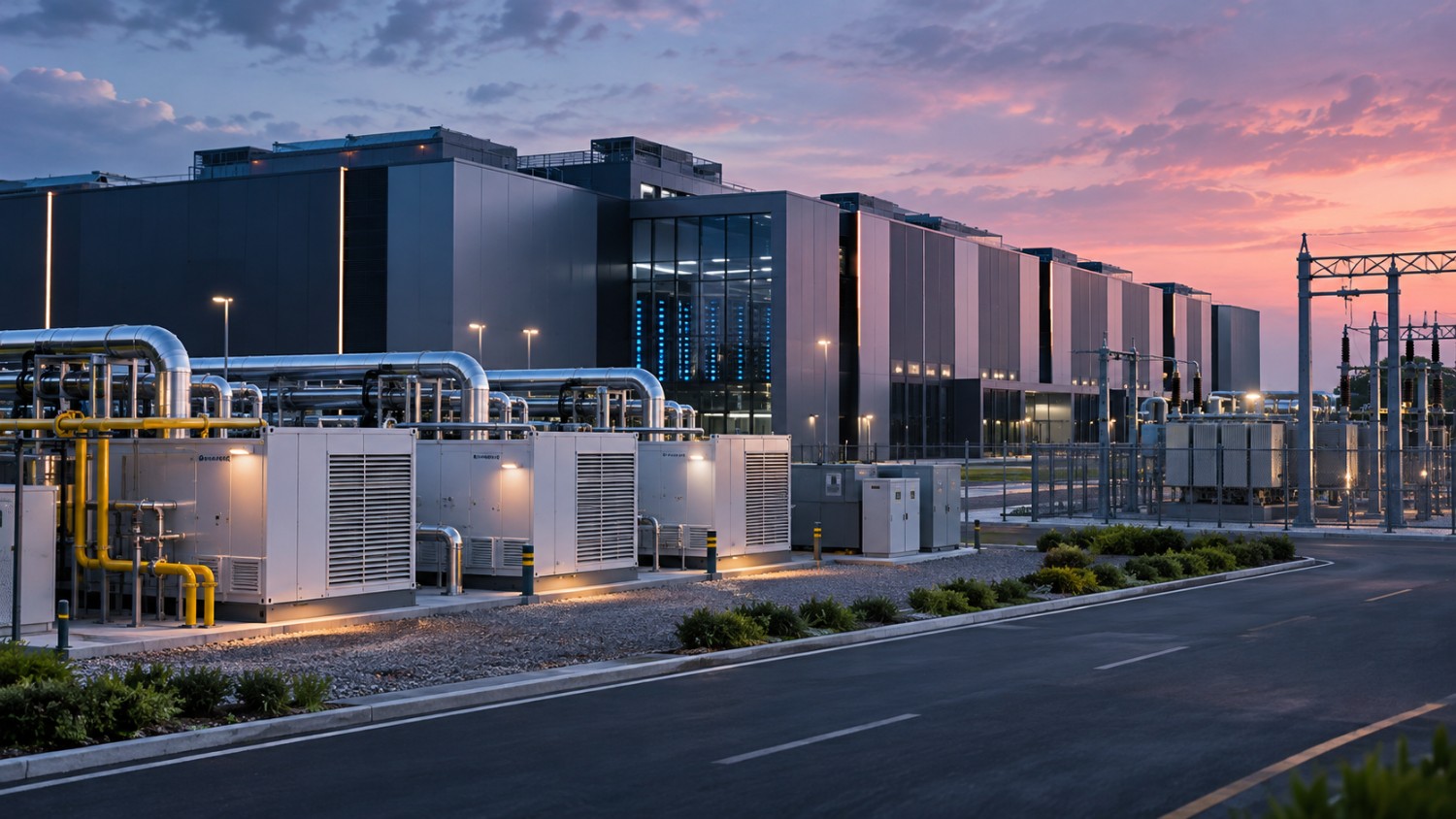
As AI infrastructure developers explore on-site generation, technologies such as linear generators are creating new possibilities for gas-to-power business models.
The Executive View
The OpportunityAI data centers are exploring on-site power, creating opportunities for gas suppliers to participate directly in electricity delivery. |
The ChallengeTechnology readiness, operating reliability, permitting and project economics must support long-term power commitments. |
The Strategic PriorityIdentify viable applications, compare generation technologies and develop bankable gas-to-power service models. |
1. AI data centers are changing what customers expect from energy suppliers
AI computing facilities place demanding requirements on electricity infrastructure. They need substantial capacity, reliable operations and the flexibility to accommodate future expansion. In some locations, grid connection schedules and infrastructure limitations can complicate development plans. This is creating interest in power generation located closer to the point of consumption. For data center operators, on-site generation can offer an additional route to electricity availability, either while awaiting grid access or as part of a longer-term power strategy.
For oil and gas companies, the opportunity is commercially significant. A customer that previously purchased fuel indirectly through the electricity value chain may now be willing to consider a direct power supply arrangement. But electricity customers evaluate suppliers differently from fuel buyers. Several factors become central to the relationship:
- Availability and continuity of electricity supply
- Operating performance and reliability
- Emissions and environmental compliance
- Price stability and long-term cost visibility
- Contractual accountability and service commitments
The opportunity therefore involves more than finding another market for natural gas. It requires a credible proposition for delivering electricity.
2. Linear generators bring a different approach to gas-to-power generation
Conventional gas engines and turbines remain established options for distributed electricity generation. Linear generators offer an alternative architecture that could be relevant to applications requiring modularity, operational flexibility and controlled emissions. Rather than using a rotating crankshaft, a linear generator converts energy from a controlled fuel-air reaction into the movement of oscillating components. Electromagnetic systems then convert that motion into electricity. Software controls operating conditions, including compression and reaction characteristics, to manage power output. The technology presents several potential advantages.
Flexible operation
Data center power requirements can change as computing workloads vary. Linear generators may be able to adjust output in response to changing demand. Their practical value depends on demonstrated response characteristics, efficiency across operating ranges and integration with the facility’s wider electrical systems.
Low nitrogen oxide emissions
Controlled, relatively low-temperature reaction conditions can support low NOx emissions. This may be relevant for facilities operating in locations with demanding air-quality requirements. Actual performance, however, needs to be verified against operating data and local permitting standards. Natural gas-based generation still produces carbon dioxide, making carbon performance a separate consideration.
Fuel flexibility
Some linear generator designs can operate using different compatible gaseous fuels. This could create opportunities involving natural gas, biogas and other suitable fuel sources, depending on equipment specifications and fuel quality requirements.
Modular capacity
Linear generators may allow generating units to be combined into larger installations. For customers planning phased development, modularity could offer a way to align capacity additions with evolving electricity requirements.
These characteristics make linear generators commercially interesting. Their ability to compete with established generation technologies will ultimately depend on cost, reliability, operating evidence and project-specific requirements.
3. Selling electricity changes the value oil and gas companies can capture
A conventional natural gas supplier earns revenue from fuel sales. A company delivering electricity directly can potentially participate in a broader commercial relationship. Depending on the operating model, contractual structure and applicable market rules, that relationship may create several revenue opportunities.
| Revenue opportunity | Commercial potential |
|---|---|
| Electricity sales | Supply contracted power to data centers and other large electricity consumers. |
| Fuel supply margin | Integrate gas sourcing or production with electricity generation. |
| Energy trading and optimization | Manage fuel procurement and electricity positions where market participation is available. |
| Grid flexibility services | Participate in eligible grid-support services where technical and regulatory conditions permit. |
For an oil and gas company with established fuel access, infrastructure capabilities and customer relationships, the attraction lies in capturing more value from the energy it supplies. Yet this opportunity brings additional obligations. Delivering electricity requires responsibility for:
- Generating assets and infrastructure
- Operational performance and maintenance
- Safety and regulatory compliance
- Customer service commitments
The commercial model must account for these responsibilities from the beginning.
4. Energy-as-a-Service could make the proposition more attractive
Data center operators invest heavily in computing infrastructure. Owning and operating power generation equipment may not be central to their business strategy. This creates an opening for Energy-as-a-Service. Under such an arrangement, an energy provider could finance, own, lease or operate generation assets and deliver electricity under a long-term agreement. The customer gains access to a defined power service without necessarily taking direct responsibility for the generating equipment.
For oil and gas companies, the model could combine fuel supply capabilities with infrastructure investment and recurring service revenue. However, the economics depend on how the agreement is structured. Important considerations include:
- Capital ownership: Who finances and owns the generating assets?
- Electricity pricing: How is the power supply priced over the contract period?
- Fuel cost exposure: Which party carries the risk of changing natural gas prices?
- Availability commitments: What performance and reliability obligations apply?
- Maintenance responsibilities: Who manages servicing, repairs and asset performance?
- Emissions compliance: How are environmental obligations allocated?
- Contract duration: Is the agreement long enough to support the investment economics?
The agreement also needs to address what happens if the customer’s demand changes or grid electricity becomes available. An attractive Energy-as-a-Service proposition must work for both parties: the customer needs dependable electricity at a competitive cost, while the provider needs sufficient returns to justify the capital and operating risk.
The commercial question
Can an energy provider deliver dependable electricity at a competitive lifetime cost while earning sufficient returns to justify the capital investment and operating risk?
5. Before investing, three questions deserve serious attention
Interest in AI infrastructure does not automatically make every gas-to-power project commercially viable. For executives considering linear generators, the investment case needs to stand up to detailed scrutiny.
5.1 Can the technology be deployed within the customer’s schedule?
Equipment availability is only one part of the deployment process. A complete project may require:
A quoted equipment lead time should never be treated as a guaranteed date for operational electricity supply. For data center customers, that distinction can determine whether a proposed solution is commercially useful.
5.2 Is there enough operating evidence to support long-term commitments?
Mission-critical electricity customers need confidence in sustained performance. Technology assessments should examine:
A technically promising generator still needs to prove that it can support the reliability expectations of the intended application.
5.3 Will the economics remain attractive as the power market changes?
A project developed to address delayed grid access may face a different commercial environment once a permanent connection becomes available. Several factors can affect long-term returns:
The business case should consider multiple operating scenarios, including:
- Permanent on-site generation
- Supplementary generation capacity
- Alternative uses for the equipment
This is particularly important when evaluating long-term leasing or service agreements.
6. The opportunity extends beyond AI infrastructure
AI data centers may be an important catalyst, but modular gas-to-power solutions could serve other markets. Industrial facilities, EV charging hubs, municipal utilities and biogas-linked generation projects can all encounter challenges involving electricity availability, operating flexibility or infrastructure investment. Their needs differ considerably.
- EV charging operators: May need to manage concentrated demand peaks.
- Industrial facilities: May prioritize continuity of operations.
- Municipal utilities: May focus on reliability and regulatory compliance.
- Biogas-linked generation projects: May seek applications that align available gaseous fuels with distributed electricity demand.
For oil and gas companies, identifying the right applications is as important as selecting the generation technology. The most attractive markets will be those where customer requirements, fuel availability, technology performance and commercial terms align.
7. How is FutureBridge evaluating the gas-to-power opportunity
For oil and gas companies, the strategic question is no longer limited to how much natural gas emerging electricity demand might consume. It also concerns where companies can participate directly in electricity delivery and build a commercially sustainable business around that capability. Our analysis compares five power generation technologies, examining their relevance to distributed-power applications and the implications for market entry. The assessment considers:
- Technology readiness
- Deployment requirements
- Operating characteristics
- Commercial potential
- Viability of a leased Energy-as-a-Service model
The next growth opportunity for oil and gas companies may depend on their ability to deliver dependable electricity, not simply supply the natural gas used to produce it.
Explore the gas-to-power opportunity with FutureBridge
Contact our energy team to discuss linear generator technologies, emerging market opportunities and commercially viable power delivery models.