

Mapping Scientific Evidence on Fragrance and Human Wellbeing for a key Player in Personal Care
At a Glance
The Client
A leading global personal care and cosmetics company.
The Challenge
The client wanted to know how strong the scientific evidence is that fragrance affects mood, behavior and physiological wellbeing, and for whom, before building claims and products around it.
The Impact
A scientific evidence assessment covering fragrance classifications, reported wellbeing effects, biological mechanisms, clinical and preclinical research, demographic factors and consumer perceptions.
Fragrance Impact Assessment | Human Wellness and Wellbeing
A leading global personal care company sought to understand the role of fragrances in human wellness and wellbeing through a structured review of the published scientific evidence.
The engagement examined fragrance classifications, associated physiological and psychological effects, clinical evidence and differences across age, gender, ethnicity and biological rhythms.
The assessment provided an evidence base to inform decisions about fragrance-related wellbeing benefits, product development and responsible communication.
The Challenges
Before investing in wellbeing-led fragrance products, the client needed to know what the science actually supports.
01. Fragrance Classification: Which fragrance types and ingredients are associated with human wellbeing?
02. Clinical Evidence: What scientific and clinical studies support reported fragrance-related effects on mood, behavior and lifestyle?
03. Biological Mechanisms: Which physiological and olfactory mechanisms may explain the observed effects?
04. Population Differences: How do reported fragrance impacts vary across age, gender, ethnicity, geography and circadian rhythms?
05. Consumer Perception: Do consumers’ beliefs about fragrance being essential to wellbeing match the available scientific evidence?
Which fragrance-related wellbeing benefits have sufficient scientific support to inform product development and responsible claims?
The FutureBridge Impact
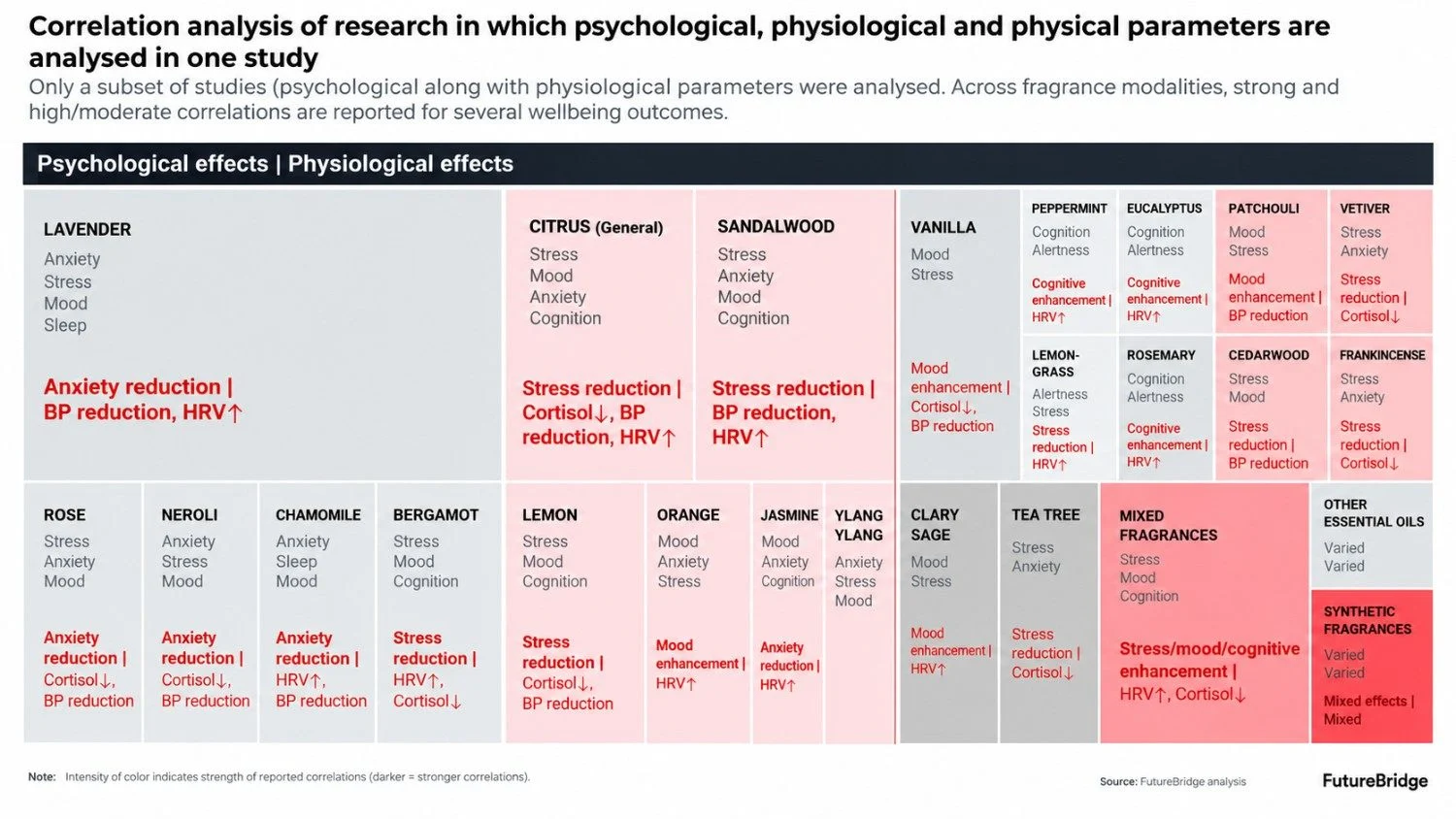
FutureBridge assessed published scientific research on fragrance-related wellbeing effects, examining evidence across in vitro, in vivo, preclinical and clinical studies, alongside biological mechanisms and population differences.
Solution Approach
01. Fragrance Landscape and Wellness Mapping
Reviewed scientific literature to identify fragrance types, relevant ingredients, emerging scientific concepts, protected innovation areas and activities of key industry players.
02. Clinical Evidence and Mechanism Assessment
Evaluated research across in vitro, in vivo, preclinical and clinical studies. Examined reported wellbeing effects, olfactory dysfunction, biological mechanisms and factors including age and circadian rhythms.
03. Scientific Research and Evidence Synthesis
Synthesized scientific findings across fragrance types, reported wellbeing effects, biological mechanisms and consumer perceptions. Considered the level of research evidence, from laboratory investigations to clinical studies, to distinguish supported findings from areas requiring further investigation.
Success Outcomes
Fragrance Knowledge Mapping
Mapped fragrance types and ingredients documented in scientific literature, including their reported associations with human wellbeing.
Clinical Evidence Insights
Evaluated clinical and preclinical research on reported fragrance effects, considering differences across age, gender, ethnicity and biological rhythms.
Mechanism Understanding
Examined biological mechanisms associated with fragrance effects and olfactory dysfunction.
Consumer Perception Insights
Examined the relationship between consumer perceptions of fragrance essentiality and the available scientific evidence on wellbeing.
Strategic Impact:
Brought together scientific literature, clinical research, biological mechanisms and consumer perception evidence to inform the client’s understanding of fragrance-related wellbeing effects and potential areas for further investigation.
Key Business Questions
Which fragrance types and ingredients are associated with human wellbeing?
FutureBridge reviewed scientific literature to identify fragrance classifications, relevant ingredients, emerging research concepts and documented associations with human wellbeing.
What scientific and clinical evidence supports fragrance-related effects on mood, behavior and lifestyle?
The assessment examined scientific research across in vitro, in vivo, preclinical and clinical studies to understand reported effects and the nature of the supporting evidence.
Which biological and olfactory mechanisms are associated with fragrance-related wellbeing effects?
FutureBridge examined reported physiological mechanisms, olfactory dysfunction and biological factors, including age-related and circadian considerations.
How do fragrance-related effects vary across demographic groups and biological rhythms?
The research considered evidence across age, gender, ethnicity, geography and circadian factors to help interpret differences in reported fragrance-related effects.
Do consumers’ beliefs about fragrance being essential to wellbeing match the evidence?
The engagement examined research on consumer perceptions of fragrance essentiality alongside the available scientific evidence, distinguishing perceived benefits from clinically established effects.
Contact us to explore how scientific evidence assessment can support fragrance research, wellbeing intelligence and evidence-led innovation.